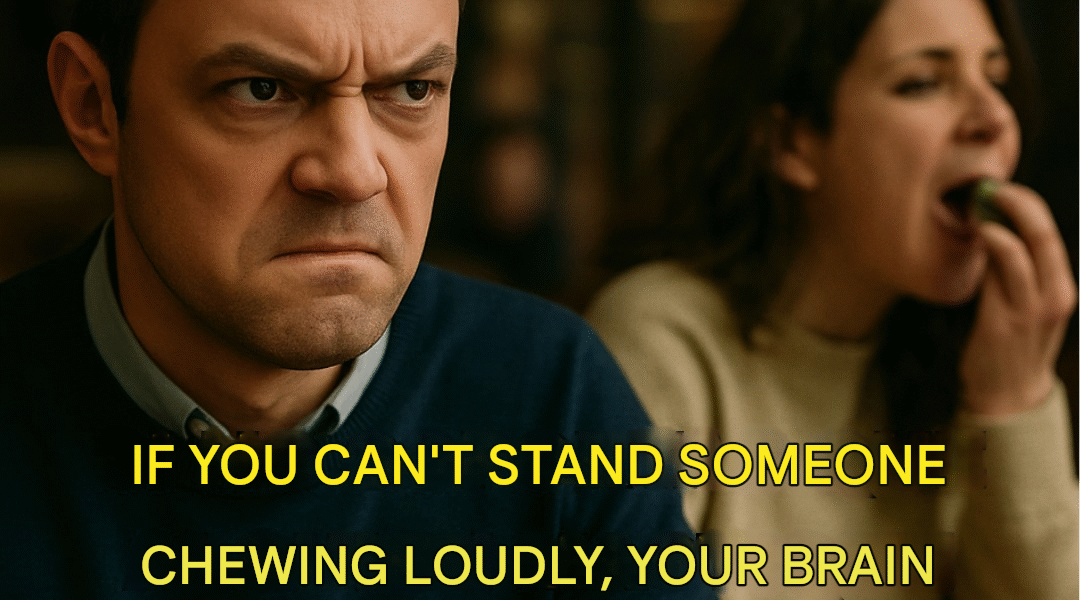
If you can’t stand someone chewing hard, your brain may be revealing a little-known psychological condition
Has it ever happened to you that you are at a quiet meal and suddenly, the sound of someone chewing loudly is unbearable? It is not simple annoyance or exaggeration. For many people, hearing everyday noises such as chewing, breathing, or clicking a pen generates a disproportionate reaction of anger, anxiety, or extreme discomfort.
This phenomenon has a name: misophonia, a little-known psychological condition that affects more people than you might imagine.
Why do I get irritated when someone chews hard?
Misophonia is not about “mania” or “rudeness,” but about how the brain processes certain sounds. There are several reasons why this reaction occurs:
- Brain
hyperconnection Studies have shown that in people with misophonia there is greater activity between the auditory cortex (which processes sounds) and brain regions related to emotions, such as the amygdala. - Intense emotional responses
The sound of chewing is interpreted as a threat or invasion of personal space, triggering feelings of anger or immediate irritation. - Learning factors
Some negative childhood experiences (such as living with someone who chewed noisily) can condition this reaction. - Sensory sensitivity
Many people with high emotional sensitivity or anxiety tend to react more intensely to repetitive noises. - Lack of control of the environment
Being in a space where you can’t avoid the sound (e.g., a long trip or a family meal) increases the feeling of frustration.
Misophonia: much more than just a nuisance
Impact on social life
People who suffer from it may avoid family gatherings, restaurants, or social gatherings for fear of being exposed to these triggering sounds.
Emotional impact
Constant irritation generates tension, arguments and even feelings of guilt, as they cannot control the reaction.
Underdiagnosed condition
As it is a little-known topic, many people do not know that what they suffer from has a name and a scientific explanation.
Tips for coping with this condition
- Acknowledge the condition: Understanding that it’s not a “whim” but a validated disorder helps reduce guilt and frustration.
- Use headphones or ambient music: White sound, soft music, or even earplugs can help you decrease triggers.
- Practice relaxation techniques: deep breathing, meditation, or mindfulness help control the emotional response.
- Talk to your environment: Explaining to family or friends that certain sounds are difficult for you to tolerate can improve understanding and reduce conflict.
- Seek professional help: A psychologist who specializes in cognitive behavioral therapy can teach you strategies for reprogramming your reaction to sounds.
- Expose yourself gradually: Some experts suggest controlled exposure techniques to reduce the intensity of the reaction over time.
Not being able to stand someone chewing hard can be much more than just a nuisance: it’s the manifestation of a condition called misophonia. Recognizing it is the first step to understanding yourself better and improving your quality of life. With the right tools, it is possible to cope with this disorder and regain peace of mind in your day-to-day life.