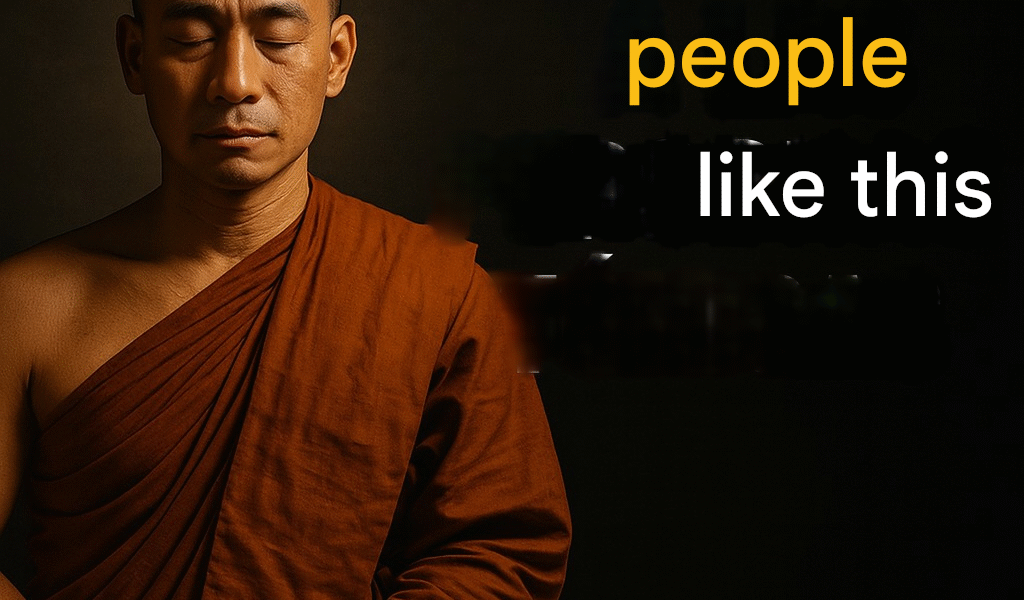
12 Buddhist Keys to Managing Toxic People Without Losing Your Peace
In a world where human interactions can be both a source of growth and suffering, learning to relate to difficult people without sacrificing our peace becomes essential.
Inspired by ancient teachings of Buddhism and contemporary mindfulness practices, this article offers 12 fundamental keys to managing toxic people from serenity, self-respect and inner wisdom.
It is no longer a matter of running away, confronting or changing the other, but of learning to remain calm, protected and aware of any type of energy that surrounds us. These keys will not only allow you to take care of your emotional well-being, but also to evolve spiritually in the midst of everyday challenges.
1. Don’t take anything personally
Buddhism teaches that the ego tends to interpret everything from offense. However, many times what the other person says or does speaks more about their pain than about you. Freeing yourself from the need to defend yourself protects you from falling into the game of conflict.
2. Protect your energy field
Just as you take care of your body, you must also take care of your energy. Visualize a shield of light around you, avoid spaces that drain you and surround yourself with environments that nourish your soul. Practicing meditation and connecting with nature are effective ways to recharge your vibrational field.
3. Don’t react, breathe
In the face of a provocation, the natural impulse is to respond with anger or defense. But if you give yourself a few seconds to breathe mindfully, you can choose to respond from a calm place and not from a wound.
4. Learn to say NO without guilt
Boundaries are acts of self-love. Learning to say “no” with respect and without the need to justify yourself is a powerful tool to preserve your peace.
5. Practice active compassion, not passivity
Being compassionate does not mean allowing abuse. Active compassion invites you to acknowledge the pain of the other without allowing it to harm you. You can withdraw from a situation without losing compassion.
6. Don’t try to change the other
One of the main sources of suffering is the desire for the other to be different. Accepting that it is not in your hands to transform anyone frees you from control and frustration.
7. Watch, don’t get hooked
Become a witness to the behaviors of others without getting emotionally involved. Conscious observation dissolves the drama and connects you to your center.
8. Don’t explain your peace
You don’t have to justify why you choose to retire, why you meditate, or why you prioritize your mental health. Your peace is a right, not a concession.
9. Choose your internal battles
Not every confrontation is worth your energy. Sometimes true strength is in choosing silence, distance, or forgiveness as ways to transcend.
10. Use absence as medicine
Turning away from what hurts you is an act of healing. Absence also speaks and is sometimes the best response to a toxic relationship.
11. Strengthen your inner practice
Don’t wait until everything is fine outside to feel good inside. Take care of your inner temple with meditation, spiritual reading, gratitude, and daily affirmations.
12. Remember: You are not responsible for healing anyone
Accompanying is different from carrying. Each being has its path, its rhythm and its wounds. Don’t burden yourself with the suffering of others or think that your mission is to save everyone.
Remember: taking care of your peace is also an act of love towards the world!
👉 Follow our page, like 👍, and share this post. Every click can make a difference—perhaps saving your own life or that of a loved one.