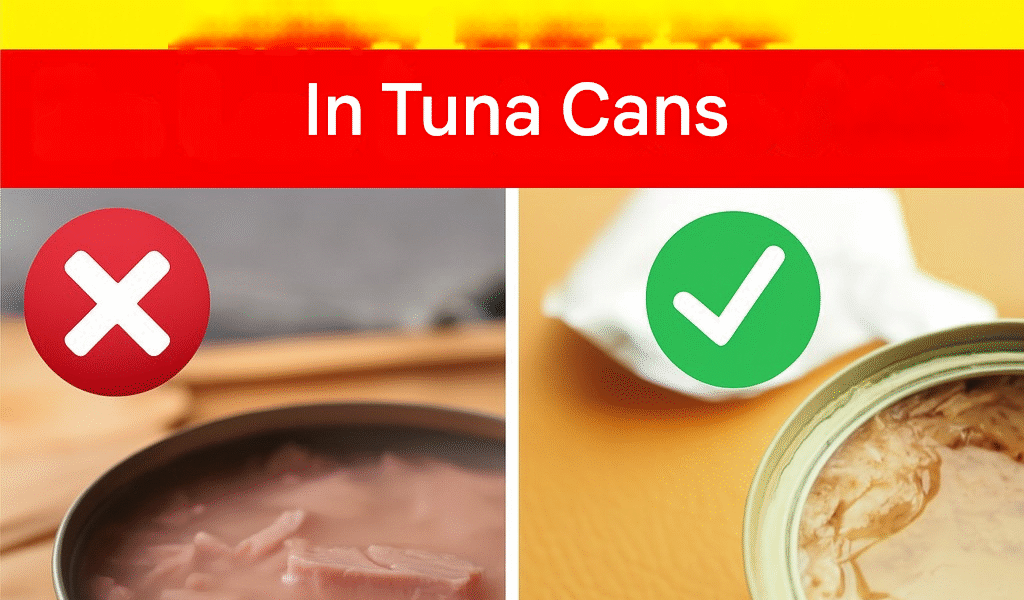
The Mistake Everyone Makes When Buying Tuna (Avoid Mercury!)
Tuna is a practical, versatile and nutritious food. It is present in millions of homes due to its flavor, its high protein content and its ease of preservation. However, there is one aspect that many consumers overlook: the mercury content.
This common mistake when choosing a can of tuna can affect your long-term health if you don’t take the right precautions.
In this article, we explain how to avoid this problem, which types of tuna contain less mercury, and what nutrition experts recommend for safe consumption.
Why is mercury dangerous and how does it get into tuna?
Mercury is a toxic heavy metal that is released into the environment primarily by industrial activity. This pollutant ends up in the oceans, where it is transformed into methylmercury, a highly toxic form that accumulates in fish.
Large, long-lived fish, such as tuna, accumulate more mercury by feeding on other contaminated fish. Frequent consumption of tuna high in mercury can lead to negative effects on the nervous system, especially in children, pregnant women, and people with neurological conditions.
Types of tuna: Which one has the most mercury?
It is essential to know the most common varieties sold in supermarkets:
1. Albacore tuna
- Also called white tuna.
- It contains higher levels of mercury than other varieties.
- It is the type that should be most limited in weekly consumption.
2. Light tuna (skipjack)
- Also called light tuna.
- It generally comes from the smaller skipjack tuna (Katsuwonus pelamis).
- It has a much lower mercury content, making it a safer option.
3. Yellowfin tuna
- Its mercury content varies, although it is usually intermediate.
- It is preferable to limit its consumption if tuna is eaten frequently.
How to Read Can Labels
Many consumers don’t pay attention to the type of tuna they’re buying. Here are some tips for choosing correctly:
- Look for the species: If the label doesn’t say “light” or “skipjack,” and it says “albacore,” it contains more mercury.
- Check the method of capture: some brands report whether the tuna is sustainably fished, which can also influence its quality.
- Prefer containers in water or olive oil: they are healthier and do not add unnecessary fats.
How much tuna is safe to eat per week?
According to nutrition experts and international agencies such as the FDA (USA) and EFSA (Europe), it is recommended:
- Healthy adults: up to 2 or 3 servings of light tuna per week.
- Children and pregnant women: limit to 1 portion per week, preferably light or skipjack tuna.
- Avoid albacore tuna if other sources of mercury are consumed, such as large shellfish (swordfish, shark, etc.).
Healthy low-mercury alternatives
If you are looking to vary your diet without giving up fish, these are good options:
- Sardines and mackerel: small, rich in omega 3 and low in mercury.
- Wild salmon: an excellent source of healthy fatty acids, with very low levels of contaminants.
- Trout or horse mackerel: nutritious and safe for frequent consumption.
Consuming tuna can still be part of a healthy diet, as long as the right varieties are chosen and the recommended amount is respected. The key is to be informed, read the labels well and not fall into the mistake of choosing any can without knowing its differences.
Your health will thank you!
👉 Follow our page, like 👍, and share this post. Every click can make a difference—perhaps saving your own life or that of a loved one.