30.09.2025
Repair any holes in 2 minutes – Fabric fixing trick that really works!
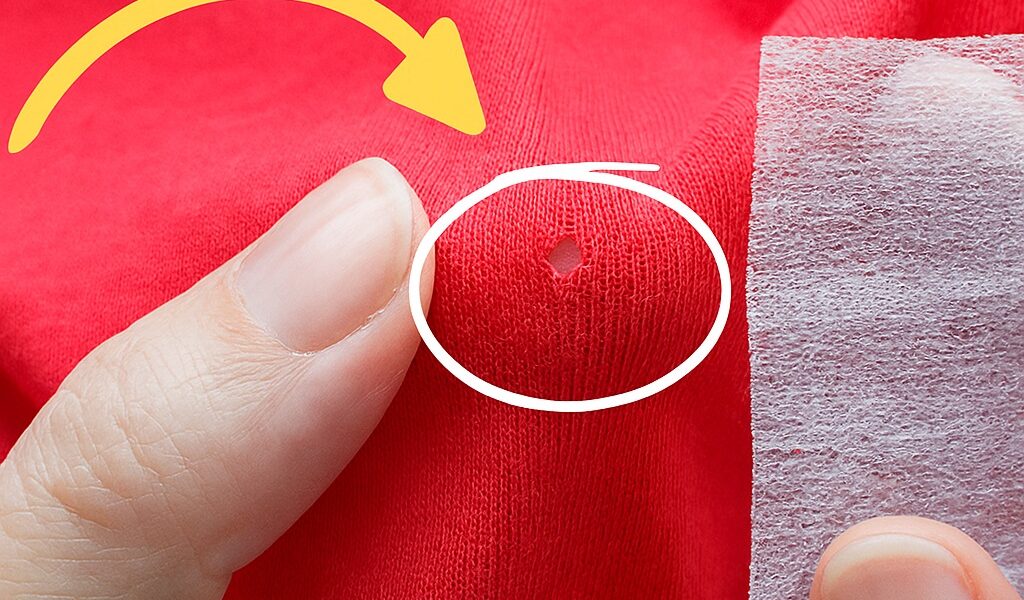
We’ve all been there: a favorite piece of clothing gets caught and ends up with a hole right in the worst possible place. Instead of throwing it away or leaving it forgotten at the bottom of the closet, there is a quick, simple and very effective way to bring it back to life.
Inspired by a trick shown on the web, this fabric repair method is not only inexpensive, but can be applied in just two minutes and without the need for sewing.
It is ideal for those looking for practical, durable and accessible solutions from home. In addition, you can follow the procedure in the following video on the Knitting Magic channel:
Materials Needed
- Self-adhesive or heat-sealable fabric patches: available in different colors and textures.
- Domestic iron (without steam preferably).
- Extra fabric (similar to damaged material) as a backing if the patch is thermal.
- Scissors to trim the patch.
- Pins or temporary tape (optional) to secure the patch before ironing.
Steps following the video
- Prepare the hole
area Wash and dry the garment to remove any dirt or lint. Iron the fabric to ensure an even surface. - Cut out the patch
Cut a circular or square patch, slightly larger than the hole. This prevents the edges from peeling off. - If
it’s a heat-sealable patch, place the adhesive side over the hole, and if desired, use pins or tape to hold it in place while ironing it. - Apply
moderate heat for 20–30 seconds. Move the iron in circular motions firmly. If the fabric is delicate, use a thin cloth between the iron and the patch. - Check and review
Let cool, remove pins, then check edges. If necessary, give another pass of the iron to ensure adhesion.
Additional tips:
- Patch type according to fabric:
- For fine or synthetic fabrics, use light patches and iron on low.
- On thick fabrics or jeans, choose reinforced patches and secure them with good thermal contact.
- Inner reinforcement:
Place a piece of lightweight fabric inside to protect the patch and improve durability. - Extra stitching:
For garments subject to tension (knees, elbows), it is advisable to sew around the patch with small stitches. - Combination dye:
If the patch contrasts a lot in color, paint the edge with textile markers or apply soft dye to blend it. - Test on less visible areas:
Before ironing definitively, do a test on a remnant to adjust temperature and time. - Aftercare:
Wash the garment inside out, on a delicate cycle and in cold water; Avoid tumble drying to prolong the life of the glue. - Reapplication:
If the patch starts to peel off, remove residue with heat and apply a new, perhaps slightly larger one.
Practical benefits
- Instant savings: repairs in minutes without the need for manual sewing.
- Easy to apply: ideal for beginners or quick fixes during a trip.
- Versatility: Works on T-shirts, pants, jackets, and more.