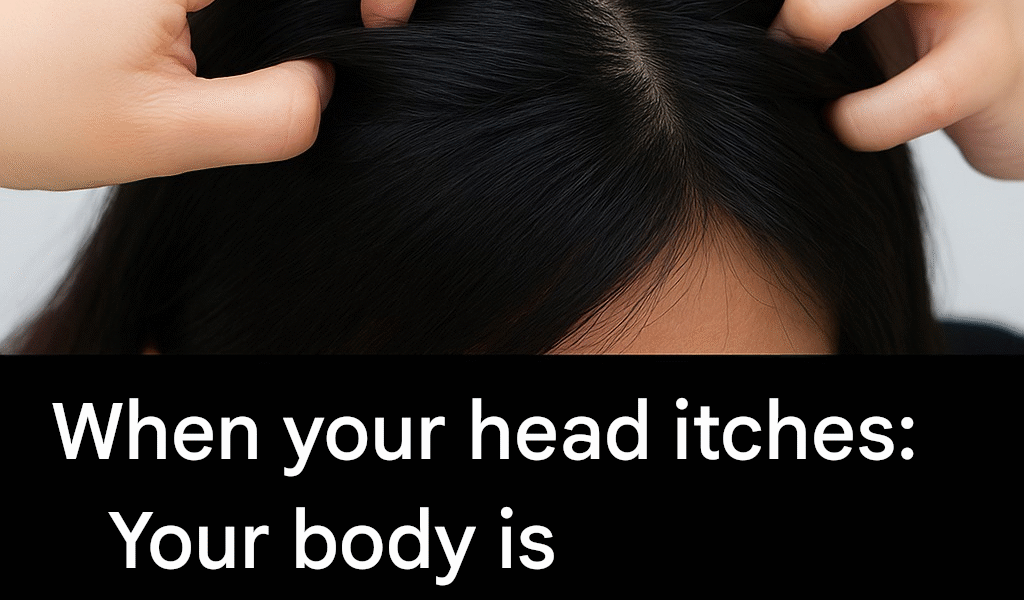
When the head itches, the body is sending a message.
An itchy scalp sensation can appear suddenly and become a real nuisance throughout the day. Whether after using a new product or on a stressful day, this irritation rarely goes unnoticed.
In this article, you’ll discover the most common causes—from dandruff to hair dye allergies—and learn simple steps to protect your skin and restore comfort.
1. Dandruff and seborrheic dermatitis
Dandruff causes small , white flakes and itching, usually due to excess oil or the use of harsh products. Seborrheic dermatitis
is a chronic inflammation that produces red patches and yellowish scales and can extend beyond the hairline.
2. Scalp psoriasis
It’s an autoimmune disease that causes thick, shiny patches covered in silvery scales. Scratching may cause cracks or bleeding, which worsens the inflammation.
3. Pityriasis rosea
Initially, a large, dry patch appears, followed by smaller lesions that spread across the scalp. It usually disappears within a few weeks, although it causes moderate itching while active.
4. Fungal infections (ringworm)
Ringworm of the scalp (tinea capitis) causes redness, intense itching, and localized hair loss. It requires dermatological diagnosis and antifungal, both oral and topical, treatment.
5. Reactions to chemicals
Dyes containing paraphenylenediamine (PPD) can cause allergies, manifesting as itching, burning, or even blistering. It’s always important to perform a sensitivity test before applying them.
6. Sunburn
Unprotected scalp exposure can cause burns, causing stinging, redness, and scaling. Areas with fine hair or bald spots are particularly vulnerable.
7. Emotional itching
Stress and anxiety release inflammatory substances that intensify itching. Practicing relaxation techniques helps manage this type of discomfort.
8. Lice
Lice infestation causes intense itching, especially behind the ears and on the nape of the neck. It’s essential to use specific shampoos and manually remove nits.
Practical tips to relieve and prevent
- Use mild shampoos and avoid very hot water.
- Don’t scratch with your nails; instead, massage gently with your fingertips.
- Apply soothing products with aloe vera or chamomile.
- Perform allergy tests before using new products.
- Maintain a balanced diet to strengthen skin health.
When to see a dermatologist?
If the itching persists for more than two weeks, is accompanied by intense redness, hair loss, or sores, consult a dermatologist. An accurate diagnosis is key to treating the underlying cause and avoiding complications.
Itchy scalp can have multiple causes, ranging from dermatological problems to emotional or chemical reactions. Identifying the cause and applying the appropriate treatment is essential to restoring skin health and well-being!
👉 Follow our page, like 👍, and share this post. Every click can make a difference—perhaps saving your own life or that of a loved one.