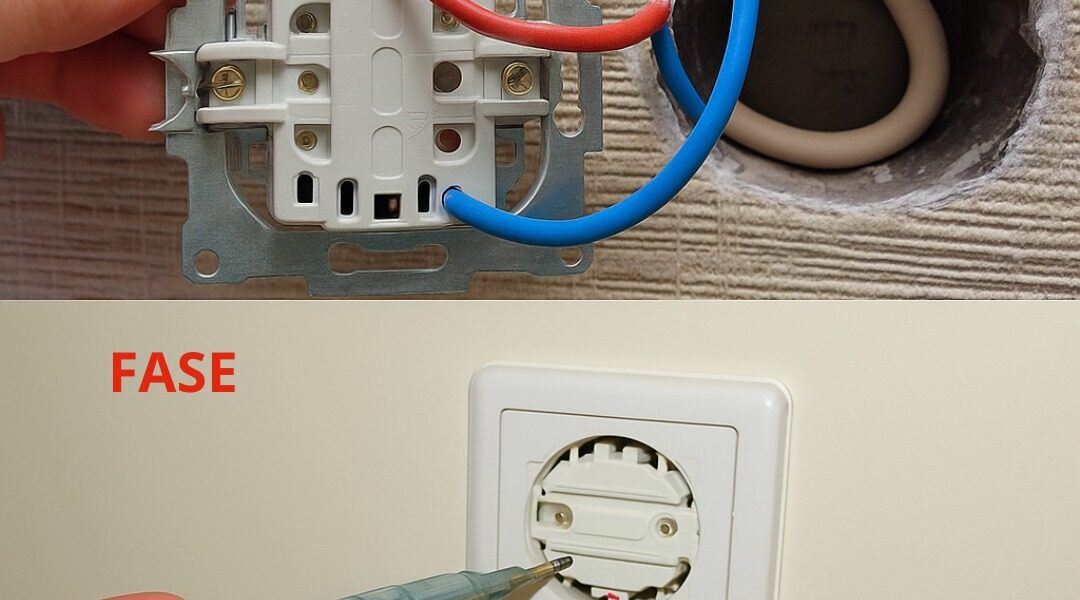
What should the switch cut: the live wire or the neutral wire?
Very often, mistakes made during electrical installation can have far greater consequences than one might imagine.
A clear example is something as common as a light switch.
If connected incorrectly, it can not only cause system failures but also lead to dangerous electric shocks when handling a lamp or appliance. Therefore, understanding what a switch should interrupt—the live wire or the neutral wire—is not a minor detail but an essential safety measure.
The correct answer is: the switch must always cut the phase .
Because?
- The phase is what carries the active current to the electrical appliances.
- If the switch cuts the phase, turning it off completely interrupts the flow of electricity, leaving the equipment without power.
- However, if the neutral wire were cut and the live wire remained connected, the appliance would still have current at its terminals even when it was “off.” This means that touching a lamp or a wire could result in an electric shock.
In other words: cutting the neutral gives a false sense of security, while cutting the phase ensures that no electricity flows to the point of consumption.
How to connect the cables correctly
- Identify the cables
- Phase (usually brown, black or red): is the cable that carries current.
- Neutral (usually blue): is the return of the circuit.
- Earth (green/yellow): is the protection one.
- Connection at the switch
- The live wire must pass through the switch.
- Connect the input phase (from the distribution box) to the input terminal of the switch.
- Connect the output phase (the one that goes to the lamp or device) to the output terminal .
- The neutral wire should never pass through the switch: it goes directly from the box to the lamp.
- Verification
- Once connected, when the switch is turned off, the lamp should be completely de-energized.
- Use a tester to check that the voltage is cut off in the phase.
Practical safety tips
- Correctly identify the phase and neutral wires
- Use a voltage tester or tester to check which is the phase.
- Do not rely solely on the cable color, as in older installations it may be reversed.
- Always turn off the circuit breaker before working
- Although it may seem like a minor task, cutting off the main power supply is the safest step before handling any cables.
- Don’t improvise with the electrical installation
- A simple mistake can be dangerous. If you’re unsure of what you’re doing, call a licensed electrician.
- Keep switches and outlets in good condition
- If you notice sparking, excessive heat, or noises when turning it on, replace the switch immediately.
- Use approved materials
- Buying quality switches and cables avoids the risk of overheating or short circuits.
The switch should always interrupt the live wire (hot ), never the neutral. This basic principle of household electricity protects people from serious accidents and ensures that appliances are truly de-energized when switched off. Respecting this detail, along with good safety practices, can make the difference between a safe home and one with hidden hazards.