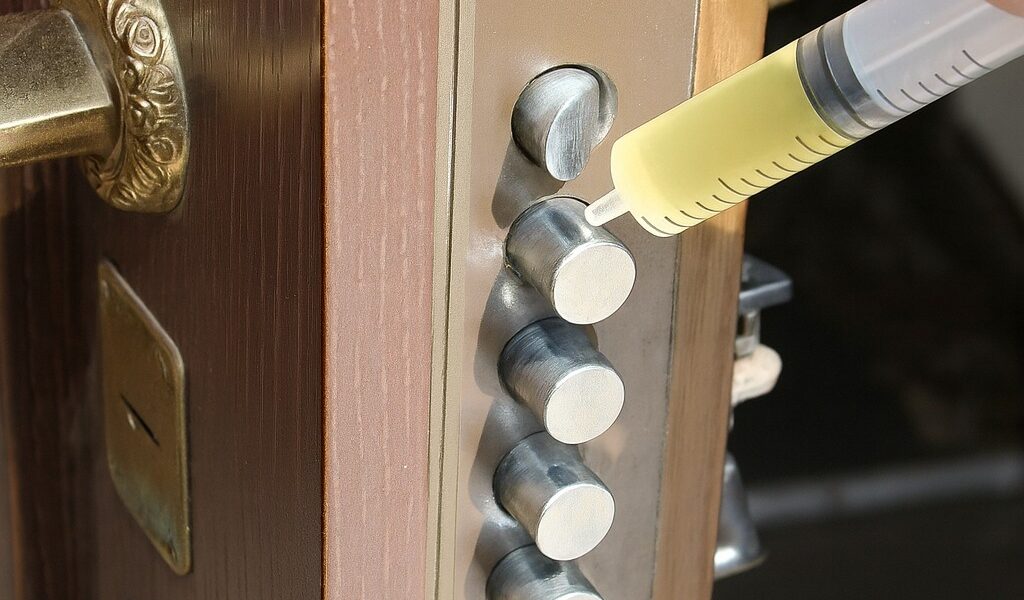
How to lubricate your lock before winter so it works smoothly, doesn’t jam or freeze
With the arrival of cold weather, it’s common for locks to jam or even freeze. Generally, it’s recommended to use special oils or lubricants to keep them in good condition. However, when you don’t have these products on hand, there’s a simple and effective trick you can use with something as common as a pencil.
Don’t miss this highly effective home remedy!
Graphite as a natural lubricant
The lead in a pencil is composed primarily of graphite, a material with lubricating properties that are very useful for metal mechanisms. Because of this, it can be a practical replacement for commercial lubricants in times of need.
Steps to apply graphite to the lock
- To prepare the graphite: Sharpen a regular pencil and rub the lead until you get enough powder. To avoid wasting any, place a sheet of paper underneath to collect the graphite.
- Form an application tube: Fold the sheet of paper into a narrow tube shape. This will allow you to easily pour the powder into the keyhole.
- Lubricate the mechanism: Carefully pour the graphite powder inside the lock.
- Distribute the graphite: Insert the key and turn it several times, so that the graphite is evenly distributed throughout the internal mechanism.
Additional tips:
- Avoid common oils: Although it may seem like a quick fix, cooking oil or similar products are not recommended, as they can attract dust and dirt, causing more blockages over time.
- Repeat in winter: If you live in very cold areas, perform this procedure several times during the winter season to prevent the lock from freezing.
- Use soft pencils (2B or higher): These contain more graphite and produce more dust, which improves lubrication.
- Don’t use too much: A little graphite is enough. If you use too much, the lock can become clogged with residue that makes it difficult to turn.
- Complement with cleaning: Before applying the graphite, you can gently blow into the lock or use compressed air to remove accumulated dust or residue.
Bottom line
In this way, with a simple pencil you can restore smoothness and functionality to a stuck lock, preventing problems precisely when you need it to work most. This home trick is especially useful in winter, when the cold and damp tend to affect metal mechanisms more.
Try it and you’ll be surprised!