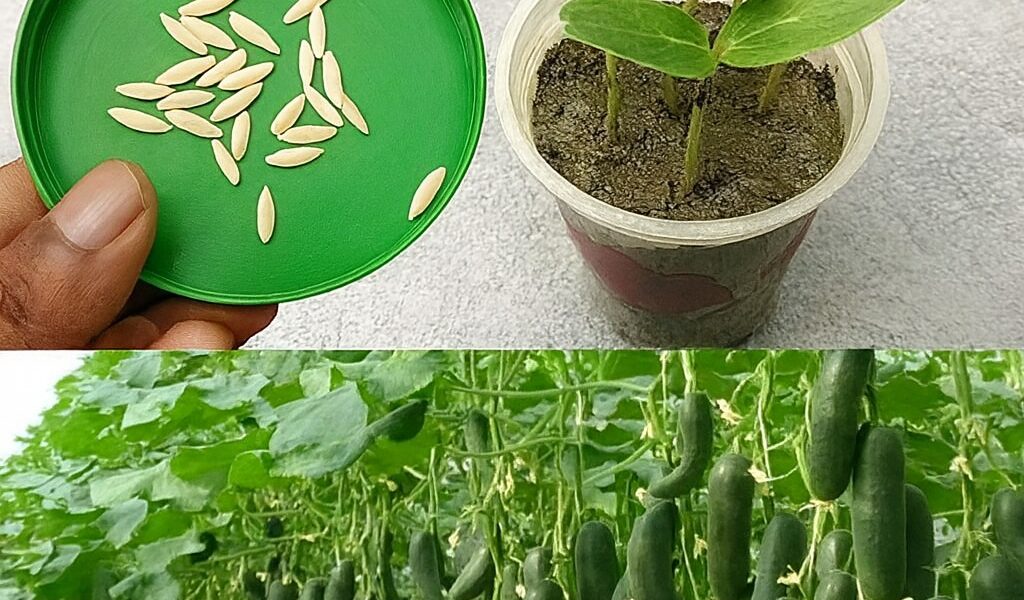
7 Mistakes You Should Avoid When Planting Cucumbers
Growing cucumbers can be a very rewarding activity: their fresh, crisp fruits are ideal for salads, pickles, or simply eaten straight from the garden. However, certain common mistakes can hinder plant growth and reduce the harvest.
Here are the 7 most common mistakes when planting cucumbers and the best practices to avoid them, based on updated recommendations from gardening experts.
1. Using an unsuitable floor
Cucumbers thrive in soils with a neutral pH, around 6 to 7 (ideally close to 7), that are well-drained, loose, and rich in organic matter . Avoid excessively acidic or clayey substrates, which retain too much moisture and hinder root development.
2. Failure to comply with thermal requirements
It is essential to plant when the soil temperature is above 13°C (55°F). Cucumbers, as a warm-season crop, are sensitive to cold; planting them too early can inhibit germination or stunt their growth . Using dark mulch can help accelerate soil warming .
3. Inconsistent irrigation
Maintaining adequate moisture is key: waterlogged soil or dry patches can result in bitter or poorly textured fruit . It is recommended to apply 2.5 to 5 cm of water per week (1 to 2 inches), with a preference for frequent, deep watering at the root level rather than on the leaves.
4. Lack of space or overcrowding
Overcrowding a small area limits access to light, air, and nutrients. Planting on raised beds or using trellises is preferable. Climbing varieties (such as Marketmore) can be spaced about 30 cm apart on the trellis, while shrubby forms require 45–66 cm between plants . Additionally, leaving 60–120 cm between rows improves ventilation and reduces the likelihood of disease.
5. Insufficient sun exposure
Cucumbers are very demanding in terms of light: they need at least 6 to 8 hours of direct sunlight daily . Ideally, they should receive morning sun, as this helps to dry the dew on the leaves and reduces the risk of fungal diseases.
6. Do not use support (trellis or lattice)
Installing trellises allows plants to grow vertically, optimizing space, increasing air circulation, and reducing fruit contact with the ground (facilitating cleaning and reducing pest damage) . It also makes harvesting easier and improves sun exposure.
7. Ignoring signs of problems
It is crucial to observe any unusual symptoms early: yellowing leaves, wilting, spots, insects, or damaged fruit. Addressing these signs immediately allows for the control of pests or diseases before they spread . Annual crop rotation is also recommended to prevent soil depletion and the accumulation of specific pathogens.
Final recommendation:
Avoiding these common mistakes when planting cucumbers can make the difference between a poor harvest and a bountiful, healthy one. Suitable soil, proper irrigation, sufficient light, adequate spacing, and structural support are essential. Furthermore, constant observation and crop rotation help maintain vigorous, disease-free plants.
By following these recommendations, you’ll be well on your way to enjoying a fresh, delicious, and sustainable cucumber harvest!
👉 Follow our page, like 👍, and share this post. Every click can make a difference—perhaps saving your own life or that of a loved one.