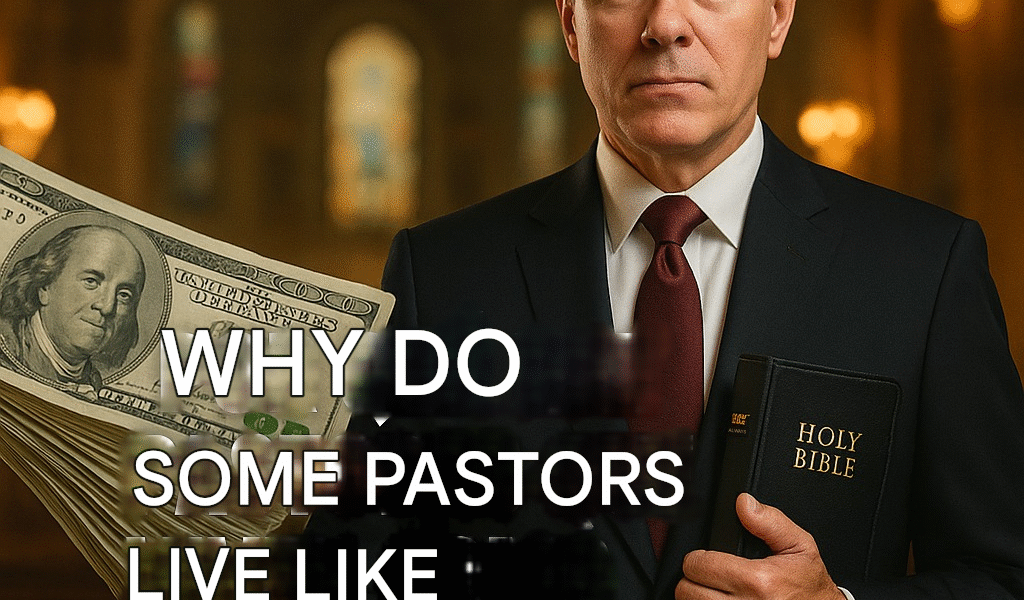
Why do some pastors live like millionaires?
In recent years, the figure of some religious leaders has generated strong controversy. While many pastors and priests live humbly and dedicate their lives to spiritual service, there are those who flaunt a lavish lifestyle: mansions, luxury cars, first-class travel, and even their own television channels.
This has sparked a profound debate: Is faith compatible with excessive wealth? Where does spiritual work end and business begin?
The phenomenon has several explanations:
1. The “prosperity theology”
In many countries, especially in Latin America and the United States, some churches preach that faith and financial offerings are rewarded with abundance. Under this doctrine, it is justified for the pastor to live in opulence, interpreting it as a “blessing from God.”
2. The power of donations
Thousands of worshippers give their tithes or voluntary contributions in the hope of receiving spiritual and material blessings. In congregations with thousands or millions of followers, these contributions can amount to millions of dollars.
3. Charisma turned into a business
Many pastors become true media figures: they sell books, organize massive conferences, produce Christian music, and even launch their own television programs or streaming channels. This turns faith into a powerful industry.
4. The lack of regulation
In many countries, churches are tax-exempt and there is no strict oversight of how their funds are used. This opens the door to abuses and the personal enrichment of certain religious leaders.
Genuine faith or spiritual business?
The controversy arises because the image of a pastor in a private jet contrasts sharply with the humble lives of the faithful who contribute weekly. For some, it’s a spiritual fraud; for others, it’s simply a reward for effort and leadership.
What do believers think?
- Those who support it argue that wealth is not a sin, and that if pastors work and generate income through books, conferences, and projects, they have the right to enjoy it.
- Those who criticize it believe that ostentation contradicts the principles of humility and service preached by Jesus, and that money should be used for charitable works and social aid.
The debate remains open.
The fundamental question is: can a pastor preach about humility and sacrifice while living like a millionaire? Is wealth a sign of divine blessing or an abuse of the faith of the most needy? The debate is open, and every believer must reflect and take a stand.
This article does not intend to generalize or attack any particular church or religious leader. It focuses on analyzing a social and economic phenomenon visible in different parts of the world. There are countless pastors and spiritual leaders who live humbly, dedicated to serving their community without luxuries or ostentation. The goal is to foster critical and reflective debate about the role of religion in contemporary society.