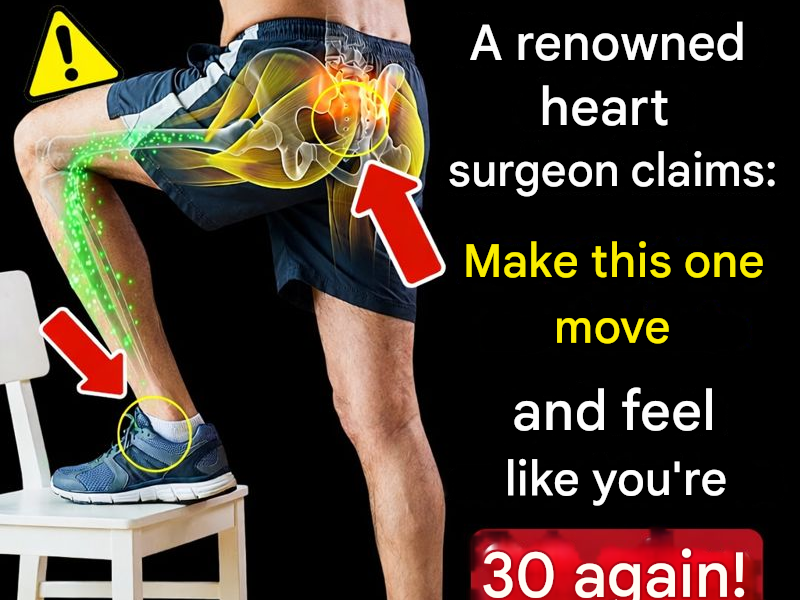
A surgeon explains a simple exercise that can help improve circulation in the legs after 60

From the age of 60, many people begin to notice silent changes in their body: the legs feel heavier, cold appears in the feet, swelling becomes frequent, or the balance is no longer the same. The worrying thing is that, in most cases, these signs are not interpreted for what they really are: the first signs of poor circulation.
From the perspective of surgery and medical research, it is now known that poor circulation in the legs is not only a discomfort associated with age, but one of the factors that most influence the loss of mobility, autonomy and quality of life in older adults. The good news is that there are simple, accessible, and practice-supported exercises that can make a real difference when done correctly and consistently.
Why Circulation in the Legs Deteriorates Over the Years
Over time, blood vessels lose elasticity, the response of the arteries slows down, and smaller capillaries are the first to stop working efficiently. This process occurs gradually and often painlessly, which makes it go unnoticed for years.
One of the most common mistakes is to believe that walking, on its own, is enough to maintain good circulation. While walking is healthy, it doesn’t always activate the deep vascular channels responsible for carrying oxygen to the leg muscles. When these channels are not properly stimulated, the blood tends to stagnate, promoting inflammation, tingling, and numbness.
The key is in specific exercises that activate what professionals call the “muscle pump”, especially in the calves, ankles and thighs, essential areas for the return of blood to the heart.
A simple exercise: heel raises with control
Among the most effective and easiest exercises to perform are heel raises performed with a conscious and controlled technique. This movement, although it seems basic, intensely activates the calf muscles, known as the “second heart” of the legs.
When these muscles contract correctly, they help push blood upwards, overcoming gravity and markedly improving venous return. The difference is not in the speed, but in the control of the movement.
How to do it correctly:
- Stand upright, hip-width apart and your weight evenly distributed.
- Slowly raise your heels for a count of three.
- Hold the up position for two seconds, consciously contracting your calves.
- Descend in a controlled manner in another three seconds, without completely relaxing.
This time under tension generates a stimulus deep in the blood vessels. With regular practice, the opening of capillaries is favored and blood flow to areas that previously received less oxygen is improved.
Recommended frequency:
Three sets of 12 to 15 repetitions, once or twice a day. As the weeks go by, you can progressively increase the holding time in the upper part of the movement.
Many people describe a pleasant warm feeling in the legs a few minutes later, a clear sign that circulation is being activated.
Complementary exercises that boost results
To maximize the benefits, this exercise can be combined with other simple movements:
- Seated leg extensions with ankle flexion, ideal for those who spend a lot of time sitting.
- Isometric contractions resting on the wall, which stimulate even the smallest capillaries.
- Pedaling movements with the legs elevated, which reduce the load of gravity on the vessels.
- Controlled backward walking, which activates underutilized muscles and neurological patterns.
The combined effect of these exercises can markedly improve circulation, reduce swelling, and restore stability when walking within a few weeks.
Important tips before you start
- Perform the exercises in a safe environment, using a wall or chair for support if necessary.
- Avoid sudden movements and always prioritize control and breathing.
- If you feel severe pain, dizziness, or persistent discomfort, stop exercising.
- Consistency is more important than intensity. Small daily routines generate better results than isolated efforts.
- If you have diagnosed circulatory problems, diabetes, or cardiovascular conditions, consult with your doctor before starting.
Improving circulation after age 60 doesn’t require complex routines or expensive equipment. With simple, well-executed and consistent exercises, it is possible to regain lightness in the legs, greater stability and a renewed feeling of energy on a daily basis.
👉 Follow our page, like 👍, and share this post. Every click can make a difference—perhaps saving your own life or that of a loved one.