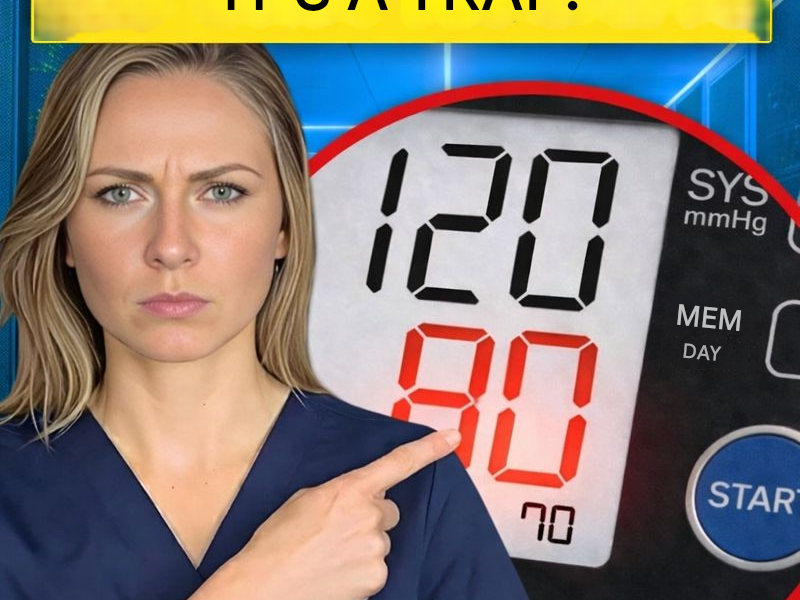
Older people: what is the recommended blood pressure according to age and what specialists say.

For years we heard the same phrase: “the ideal pressure is 120/80”. And for many middle-aged adults, looking for lower numbers can reduce cardiovascular risks. But in older people—especially those over the age of 75 or in those who are frail—the story can change, because lowering the pressure too much can bring unwanted effects: dizziness when standing up, fainting, falls, injuries and even serious complications. That concern is not a “fairy tale”: in intensive control clinical studies, more episodes of hypotension and syncope were observed in some groups, even when there were cardiovascular benefits.
At the same time, it is also true that trials such as SPRINT showed benefits of an intensive systolic target in selected older adults (e.g., without diabetes), which fueled the idea of “the lower, the better.” The problem is that not all older people look like those in a clinical trial: in real life there is more frailty, multiple diseases, varied medication and a greater risk of falls. For this reason, today there is more and more talk of individualizing and not chasing a “perfect” number at any cost.
When “perfect” becomes dangerous: a story that repeats itself
Imagine a 78-year-old woman who, after years of hypertension, manages to get close to 120/80 with more medication. At first everything seems fine, but then something subtle appears: dizziness when you get up. A few seconds of instability, the need to lean on, the fear of walking fast. Many times this is interpreted as “age things”.
Until one day, when you get out of bed, the dizziness is stronger, the legs fail and the fall comes. There is no need to exaggerate: a hip fracture can start a difficult chain—surgery, rehabilitation, fear of moving, loss of strength, respiratory complications—and life is drastically reduced.
The key here is not the anecdote: it is the mechanism. In many older people, when standing up, the pressure can plummet (orthostatic hypotension). And if treatment is also being “tightened” to reach very low figures, the risk increases.
Why “Too Low” Blood Pressure Feels Worse in the Elderly
There are normal changes of aging that make the pressure balance more fragile:
- Stiffer arteries: over time they lose elasticity. This can cause your body to need a little more pressure to keep your brain flowing, especially when standing.
- Slower reflexes (baroreceptors): Sensors that adjust the pressure when you change posture respond more slowly, facilitating sudden drops.
- Greater sensitivity to drugs: kidney and liver process differently; A “normal” dose may hit harder.
- Different risks: at 50 there is concern about the damage “over decades”; At 80, a fall today can change everything.
And be careful with a detail that many people overlook: in older people, systolic pressure (the “high” one) is usually very important, but it is also advisable to prevent the diastolic pressure (the “low”) from being too low on a sustained basis, because it can compromise the heart’s perfusion and contribute to symptoms.
So, what numbers are usually reasonable in older adults?
There is no single magic number. Modern guidelines tend to maintain low overall targets (e.g. <130/80 in many adults), but insist on adjusting for age, frailty, comorbidities, tolerance and adverse effects.
As a practical guideline for talking to your doctor (not to self-medicate), much evidence and clinical practice agree that, in people over 75 or frail people, it may be safer to avoid “squeezing” towards 120 if symptoms appear, and to move in moderate ranges, prioritizing stability and prevention of falls. (And if there is diabetes, kidney disease, a history of heart attack/stroke, etc., the goal may vary.)
Most importantly, the best pressure isn’t the lowest; it’s the one that protects you without taking away your stability, energy, and quality of life.
The red flag you shouldn’t ignore
If any of these points happen to you, it is worth checking it out:
- Dizziness or blurred vision when you wake up
- Sudden weakness when standing up
- “I’m going to pass out” when I get out of bed or on the couch
- Recent falls or frequent trips
- “New” tiredness and confusion since adjusting medication
These symptoms should not normalize. They can be a clue that the pressure is getting too low for your body (or that the medication is strong).
Practical tips and recommendations
- Don’t adjust medication on your own. If you suspect that your blood pressure is too low or you have dizziness, ask for an appointment and discuss it clearly.
- Measure your blood pressure at home in an orderly manner. Ideally in the morning and evening for 1–2 weeks and records date/time/symptoms.
- Ask about “orthostatic hypotension.” In consultation (or with professional indication) the change in pressure when moving from lying down to standing can be evaluated.
- Prioritize safety: If you get dizzy, get up in stages (sit, wait, stand), and make sure you have support nearby.
- Check the whole: dehydration, diuretics, alcohol, heat, very large meals, and some drugs can promote lows.
- Take your records to your doctor. A conversation with data (averages + symptoms) changes everything: it helps to decide whether to go up, down or simplify treatment.
In older adults, chasing 120/80 as if it were a universal rule can be a mistake if dizziness, slights when standing up, or falls appear. The real goal is not to “beat the number,” but to protect your brain, heart, kidneys, and—above all—your stability and your daily life. The best decision is usually the one made with your doctor, looking at your entire case, not an isolated figure.
👉 Follow our page, like 👍, and share this post. Every click can make a difference—perhaps saving your own life or that of a loved one.