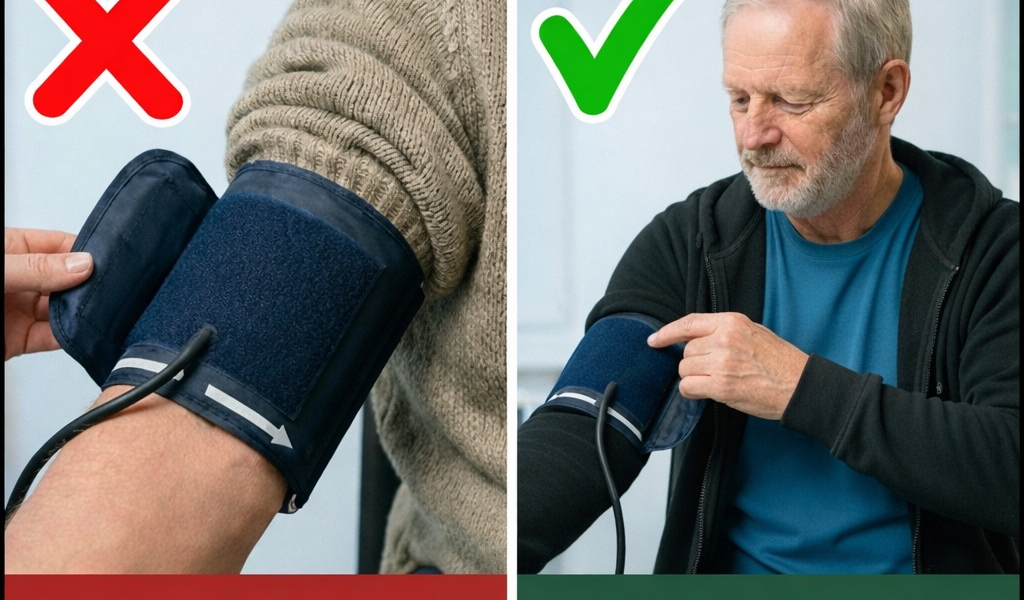
Why pressure values can vary depending on how and when it is measured.

Many people spend months taking blood pressure medication without needing it… and others, on the contrary, have real hypertension but the device shows normal values. In both cases, the problem is usually the same: the measurement is done wrong.
Measuring blood pressure correctly is no small detail. A diagnosis, unnecessary treatment, or, worse, an overlooked serious risk may depend on that number. That’s why it’s critical to know what really influences results and how to avoid common mistakes.
Preparation starts from the day before
Most believe that it is enough to sit down and place the blood pressure monitor. But the preparation starts earlier:
- Avoid alcohol at least 24 hours beforehand. Even small amounts can keep blood vessels tight and raise pressure.
- Get at least 7 hours of sleep. Lack of sleep causes physiological stress, releases adrenaline, and increases pressure.
If you don’t meet these conditions, the next day’s measurement may come out artificially high.
What NOT to do before measuring the pressure
During the previous 30 minutes, avoid:
- Coffee, tea, energy drinks, or caffeinated soft drinks
- Cigarettes or nicotine
- Heavy or very large meals
Caffeine speeds up the heart, nicotine constricts the vessels, and heavy digestion redistributes the blood. All of this alters the outcome.
If you ran or climbed stairs, wait
A very common mistake occurs when someone arrives in a hurry, sits down and their blood pressure is taken right away.
After any effort you should wait between 5 and 10 minutes sitting, breathing calmly.
If you don’t, the pressure can come out 20 or even 30 points higher.
The Golden Rule: Measure at least three times
The first value almost always comes out higher due to nerves or tension.
This is known as the white coat effect.
The correct thing to do is:
- Measuring for the first time
- Wait 3 minutes
- Measure again
- Repeat a third time
The reliable result is usually the average of the second and third attempts.
The right posture completely changes the result
For accurate measurement:
- Always sitting (not lying down, except in medical cases)
- Straight back supported by the backrest
- Both feet fully flat on the floor
- Do not cross your legs
- Arm resting on a table
- Elbow at heart level
If your arm is lower, the pressure will appear higher.
If it is higher, it will appear lower.
Never measure pressure on clothing
This error happens a lot.
- Do not measure over sweater, shirt or jacket
- Do not roll the sleeve by squeezing the arm
Fabric or clothing pressure distorts the reading.
The sleeve must be removed without compressing the arm.
The size of the bracelet matters (a lot)
There are different cuff sizes:
- Children
- Standard
- Large
If the cuff is too small for your arm, it will read falsely high values.
This often happens in people who are overweight or have large arms.
How to correctly attach the cuff
- It should go about two fingers above the crook of the elbow
- Snug but allowing a finger to pass through
- The mark of the artery facing the inside of the arm
If it is loose or too tight, the result will be incorrect.
Electronic or manual blood pressure monitor?
The electronic arm is totally reliable if:
- It is calibrated
- Used correctly
The manual requires professional technique, so for home use electronics are usually the best option.
In addition, it is advisable to check or change the device every 4 years, as the sensors lose precision.
Always measure both hands the first time
If the difference between arms exceeds 10-15 points, it can indicate:
- arterial narrowing
- Atherosclerosis
- vascular problems
In that case, consult a doctor.
How often to measure
- Healthy people → every 6 months
- Controlled hypertension → one week of measurements every 3 months
- Recent medication adjustment → measure morning and evening every day
Recording the values helps a lot with tracking.
A key factor that many ignore
One of the most effective methods to reduce blood pressure is not a pill: lose weight.
Losing just 5 to 7 kg can reduce pressure by 10 to 15 points.
Excess fat forces the heart to work harder and increases vascular tension.
Tips and recommendations
- Always measure the pressure at the same time if possible
- Rest in silence before measurement
- Don’t talk or move during the process
- Keep a written or digital record
- Always use the same arm for regular tracking
- If you get a very high value, repeat after a few minutes before alarming yourself
- Always consult a professional before starting or stopping medications
Measuring blood pressure correctly is not a simple procedure: it is the basis for really knowing how your cardiovascular health is. A small error in technique can completely change the result. With proper preparation, correct posture, and repeated measurements, the numbers will reflect reality and allow you to make confident decisions about your health.