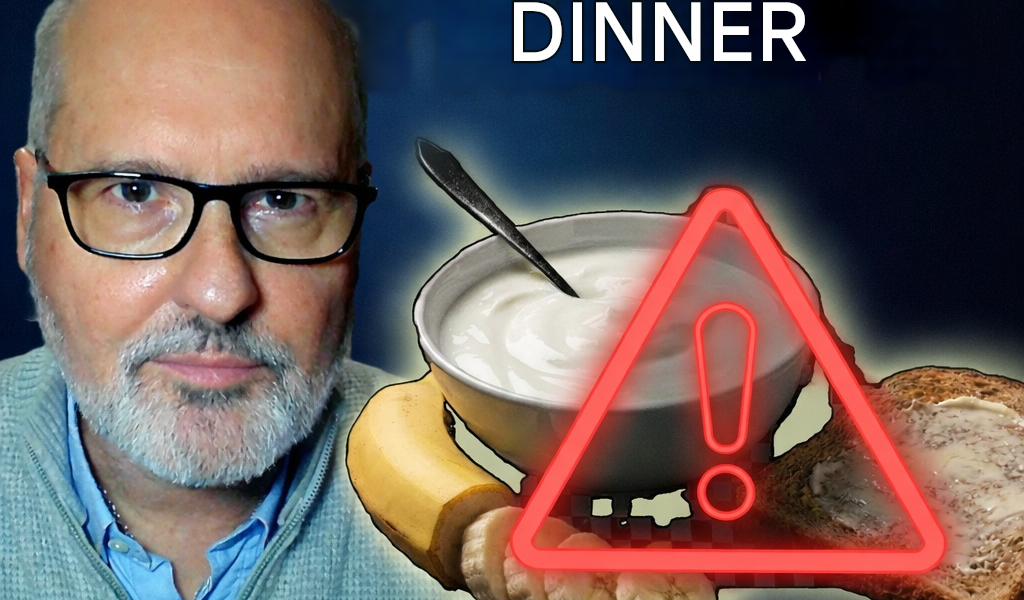
Dinner that can affect your night’s rest and how to best choose your meals at night.

You go to bed peacefully after a dinner that seems perfect: yogurt, a banana, some oatmeal or toast. All light, all “healthy”. However, at 3:30 or 4:30 in the morning you wake up with a racing heart, heat in the body and a completely alert mind. You slept… but you did not rest.
Many think it’s stress, age, prostate (in the case of men) or some infection. But in many cases it is nothing like that. What may be happening is a metabolic imbalance that you inadvertently activated during dinner.
The problem isn’t always coffee
For years we have been told that eating fruit and yogurt for dinner is the healthiest thing in the world. And yes, it can be a good option for weight management or heart care. But after a certain age, especially after 50, that kind of dinner can become a sleep trap.
Why?
Because foods such as fruit, sugary yogurts, refined oatmeal or white bread contain fast-absorbing carbohydrates. This causes a rapid rise in blood sugar. The pancreas responds by releasing insulin to lower it. The problem arises when that drop is too abrupt while you sleep.
Your brain interprets that fall as an emergency.
Then activate “survival mode”: it releases adrenaline and cortisol to raise blood sugar quickly. The result? You wake up with tachycardia, heat, mental restlessness and difficulty going back to sleep.
It’s not anxiety. It’s your body trying to stabilize itself.
Signs that it could be nocturnal reactive hypoglycemia
You might suspect this problem if:
- You wake up almost always between 3:00 and 5:00 in the morning.
- You feel palpitations or sudden warmth.
- Your mind is activated immediately.
- You wake up tired, as if you haven’t rested.
If you identify with this, it’s worth checking out your dinner.
Important: If you’re using insulin or diabetes medications, check with your doctor before making changes to your diet.
The Three Rules to Protect Your Sleep
1. Put the metabolic “brake” on your dinner
The key is not to eliminate carbohydrates, but to combine them correctly.
Always include:
- Protein (eggs, fish, chicken, legumes).
- Healthy fats (olive oil, avocado, nuts).
- Vegetables rich in fiber.
Protein and fat act as a natural brake: they slow down the absorption of sugar in the blood and prevent sudden spikes and drops.
More stable examples for the night:
- Scrambled eggs with spinach and a drizzle of olive oil.
- Salmon or chicken with salad and avocado.
- Natural yogurt without sugar with nuts and seeds (in small quantities).
On the other hand, a toast with jam or a large bowl of fruit alone can favor the problem.
2. Dinner ahead of time
Try to eat dinner at least two hours before bedtime.
If you eat and go straight to bed, digestion competes with deep sleep. Your body should be repairing tissues and balancing hormones, but instead it’s still working on processing food.
If you’re home late, a small, protein-rich dinner is better than a large meal right before bed.
3. Beware of “false friends”
There are foods that seem harmless but affect the second half of sleep:
- Alcohol: makes you sleepy at first, but fragments rest later on.
- “Light” sweet desserts.
- Chocolate at night.
- “Digestive” cookies before bed.
They can all trigger the same sugar rise and fall mechanism that activates adrenaline in the early morning.
Three-night trial
Do a simple experiment:
For three nights in a row, he dined on protein, vegetables and healthy fats. Avoid sweet desserts and alcohol.
If the awakenings with palpitations disappear, the problem was probably metabolic.
If it doesn’t get better and you also snore loudly, pause your breath, or feel extremely tired during the day, it could be sleep apnea, a condition that does require medical evaluation.
Tips and recommendations
- Don’t eat only carbs for dinner, even if they’re “healthy.”
- Avoid large amounts of fruit at night if you have frequent awakenings.
- Cut back on alcohol, especially if you sleep poorly in the second half of the night.
- Maintain regular dinner and sleep times.
- If you’re over 50 and sleep fragments, check your diet first before assuming it’s just “age.”
- See a professional if you have diabetes, high blood pressure, or persistent symptoms.
Sometimes it’s not stress or coffee that ruins your rest. A seemingly healthy dinner may be activating a hormonal cycle that disrupts your sleep. Adjusting your composition and dinner schedule can be a small change with a huge impact on how you get a good night’s sleep.