
The most effective trick to save a dying orchid and make it bloom again
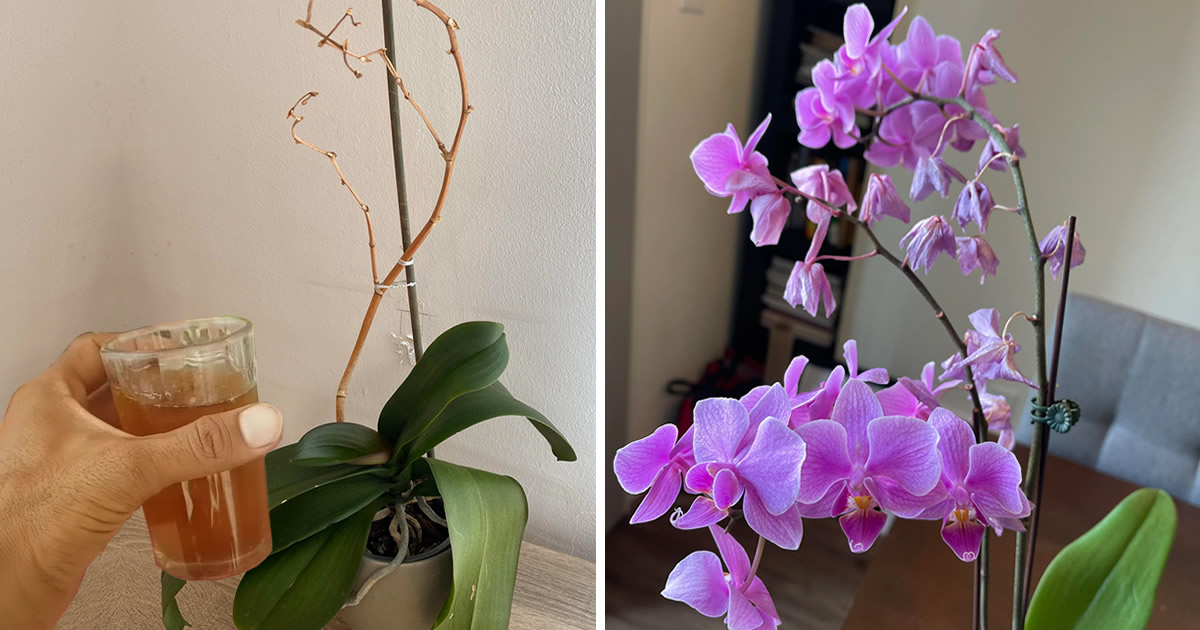
Orchids are exotic plants that are as fascinating as they are delicate, appreciated for their beauty and refinement. However, they can sometimes suffer due to inadequate environmental conditions or wrong care, which leads them to a slow agony.
If you’re faced with a dying orchid, don’t despair! With a little attention and tricks, you can help your plant revive and bloom once again. In this article, we’ll explore some essential tricks for recovering a dying orchid.
- Inspect the plant carefully: Before taking any action, take a close look at your orchid. Check for yellowing or spotted leaves, dry or moldy roots, and wilted flowers. This information will help you identify the problem and take the right corrective measures.
- Restores the right growing conditions: Orchids require specific conditions to thrive. Make sure to provide enough light, but avoid direct sunlight during the hottest hours of the day. Maintain a moderate temperature during the day and a slight decrease at night. Humidity is crucial for orchids, so use a humidifier or tray with water to increase the humidity around the plant.
- Change the pot to your orchid: If you notice moldy or damaged roots, you may need to change the container. Choose a clear pot with drainage holes and use a substrate designed for orchids, such as sphagnum moss or bark. Gently remove the orchid from the old pot, cutting off any dry or moldy roots and place it in the new substrate. Make sure you don’t bury the roots too much, leaving room for air to circulate.
- Correct watering: Overwatering or underwatering can cause problems for orchids. Ideally, you should only water the plant when the substrate is dry to the touch. Using water at room temperature is preferable to cold water, as orchids prefer warmer temperatures. Avoid water accumulation in the saucer, to avoid rotting the roots.
- Adequate nutrition: Orchids need nutrients to survive and bloom. Use a fertilizer specifically designed for orchids with a low concentration of nitrogen. Apply fertilizer every two to three weeks during the growing season and dilute it according to the manufacturer’s directions.
- Thorough pruning: Pruning can stimulate growth and make your orchid bloom again. After the flowers have wilted, carefully trim the stem just above a knot or side eye. This will encourage the plant to produce new shoots and flowers.
- Be patient: Recovering a dying orchid takes time and patience. Don’t expect immediate results, but watch closely for signs of improvement and continue to provide proper care.
In conclusion, recovering a dying orchid and getting it back to bloom requires a combination of attention, care, and knowledge of the plant’s specific needs.
Watch your orchid carefully, provide it with the right growing conditions, adjust watering and nutrition, and don’t forget to take a look at the roots. With a little love and dedication, your orchid could surprise you with a beautiful lush bloom.
Share article
Important: This website does not give medical advice, nor does it suggest the use of techniques as a form of treatment for physical problems, for which medical advice is required. If you decide to apply the information contained in this site, you do not assume responsibility for it. The intention of the site is to be illustrative, not exhortative or didactic.