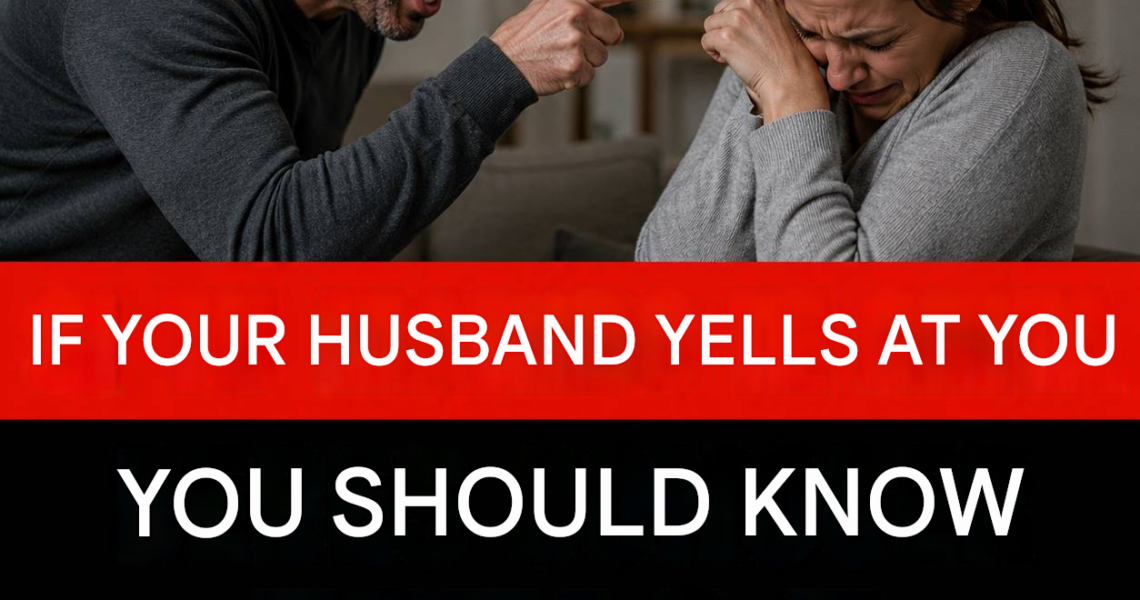
7 Signs That A Relationship Needs Boundaries When Your Husband Yells At You

A husband yelling should not be normalized as part of cohabitation. An argument can escalate from time to time, but when the yelling repeats, generates fear or makes the other person shut up to avoid problems, the relationship needs limits.
Understanding why it happens does not mean justifying it. There may be stress, frustration, or poor communication, but no reason turns yelling into a healthy way to relate. These seven signs show when the limit can no longer wait. The problem is not a specific emotion, but turning the shout into a method of communicating. When that happens, the other person learns to shut up, give in, or disappear emotionally.
1. Shout over small topics
If any disagreement ends in shouting, the conversation is no longer safe. It is not about the specific issue, but about a way of reacting that makes it difficult to talk calmly. This pattern can start with small arguments and become more and more frequent. That’s why it’s a good idea to identify it before it seems normal.
2. You measure every word so you don’t make him angry
When you start calculating what to say, how to say it, and when to speak to avoid an explosion, fear is already organizing the relationship. That constant tension is not normal or healthy.
3. Then act like nothing happened
Minimizing the damage, saying “that’s how I am” or continuing as if the scream didn’t matter prevents repairing the situation. A real apology needs acknowledgment and behavior change.
4. Use yelling to impose decisions
If he yells to win arguments about money, family, outings, parenting, or friendships, yelling becomes a tool of control. The other person does not decide freely; he gives in to avoid conflict.
5. It makes you feel responsible for their anger
Phrases such as “you make me scream” or “if you weren’t like that, I wouldn’t react” transfer guilt. Each adult is responsible for how they handle their anger. When someone acts as if nothing has happened, the injured person is left alone with the discomfort. That lack of reparation is also part of the problem.
6. You feel anxious before talking about certain topics
If there are topics that you avoid for fear of their reaction, the relationship is losing trust. Anticipatory anxiety is a clear sign of emotional exhaustion.
7. Yelling comes with insults, threats, or humiliation
When shouting is mixed with insults, intimidation, threats or physical fear, the limit should be immediate. External support, a trusted network or professional help may be needed.
In conclusion, if your husband yells about anything, makes you measure your words, minimizes the damage, imposes decisions, blames you, generates anxiety or intimidates you, the relationship needs clear boundaries. Respect is not optional. A healthy boundary can be simple: “If you yell at me, I won’t follow this conversation.” The important thing is to comply with it, because a limit that is not maintained loses strength quickly. If the other person accepts the limit, they should demonstrate it with deeds: lower the tone, apologize without blaming, and learn to argue without intimidating. Without that change, the promise remains only in words.
No one “causes” someone else to lose control. There may be disagreements, but each adult must take ownership of their words, their tone, and their reactions.