African black rain frog: characteristics, habitat and curiosities of this peculiar South African amphibian
Among the enormous diversity of amphibians that inhabit the planet, there is a species that stands out for its unique appearance and behavior. It is the African black rain frog (Breviceps fuscus), a small animal native to South Africa whose particular appearance has aroused the curiosity of biologists, photographers and internet users around the world.
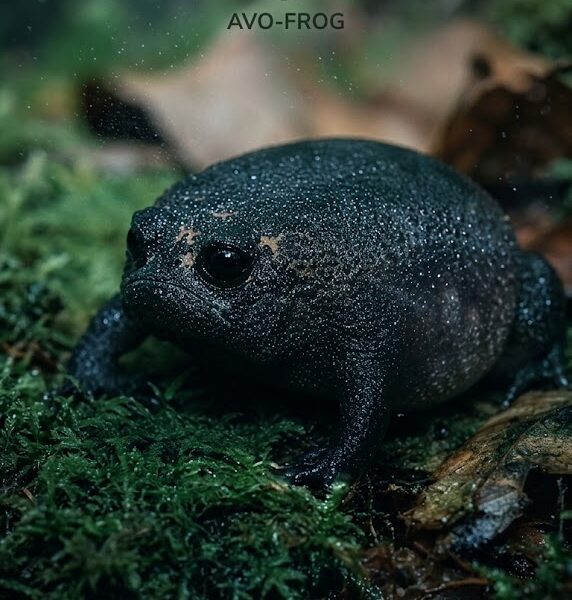
This creature went viral in recent years due to its countenance that many consider moody, as well as its oval shape and its rough skin of a dark olive green, almost black tone. The combination of these traits led numerous Internet users to compare this amphibian to an angry avocado, a description that quickly became popular on social networks.
Origin and habitat of the black rain frog
Breviceps fuscus mainly inhabits a specific region of the southern African continent, known as the Cape fold belt, in South Africa. This area is characterized by its particular climate and its fynbos-type vegetation, a unique ecosystem in the world where various endemic species found the ideal conditions to develop.
Unlike many other amphibians, this frog does not depend on water to live nor is it frequently found near bodies of water. Its rounded shape and short limbs make it unsuitable for swimming, but extremely efficient for other activities, such as digging.
A natural excavator
One of the most notable characteristics of this species is its subterranean behavior. The black rain frog is a digging animal that can build tunnels up to one and a half meters deep under the surface of the ground. These burrows serve as a refuge, resting place and also as a space for reproduction.
Thanks to this ability, the amphibian can stay hidden from predators and protect itself from adverse environmental conditions. It spends much of its life underground, emerging mainly during the rainy seasons, from which its common name comes.
A curious defense mechanism
When it feels threatened or perceives danger, this frog resorts to a strategy uncommon in the animal kingdom: it inflates its body with air to significantly increase its apparent size. This behavior serves several defensive functions.
Firstly, when inflated, it appears larger and therefore less appetising or harder for potential predators to swallow. But the most ingenious use of this resource appears when the frog is digging. If a predator tries to extract her from the tunnel, she inflates inside the hole, literally getting wedged into the ground and making it almost impossible for her to be pulled out of hiding.
This mechanism pairs perfectly with their underground lifestyle and represents a very effective evolutionary adaptation for a species that lacks the ability to flee quickly due to its short legs and bulky body.
Reproduction and parental care
The reproductive cycle of the black rain frog also presents fascinating particularities. During the mating season, females face an anatomical challenge: due to their rounded shape and the relatively small size of the males, it is difficult for males to remain attached to them during copulation.
To solve this problem, nature developed a quite creative solution. The female secretes a sticky substance through the skin of her back that acts as a natural adhesive, allowing the male to remain attached during the reproductive process.
After egg laying, parental behavior is also striking. Males stay inside the burrow next to the clutch, protecting the eggs from potential threats. During this period, they emit small characteristic chirps, sounds that fulfill both territorial and communicative functions.
A frog without tadpoles
Another fun fact about this species is that, unlike most frogs, it does not go through a typical aquatic larval stage. The eggs deposited in the burrow develop directly into small, fully formed frogs, bypassing the swimming tadpole stage. This adaptation is linked to their terrestrial and underground lifestyle, far from bodies of water where amphibians usually develop.
Ecological importance and conservation
Although the African black rain frog is not currently among the most endangered species, its limited geographic distribution makes it vulnerable to environmental changes. Habitat destruction, wildfires, agricultural expansion, and climate change pose potential threats to their populations.
As with many endemic species, its conservation depends largely on the preservation of the unique ecosystems where it lives. Amphibians, in general, are considered bioindicators of environmental health, since their permeable skin makes them especially sensitive to pollution and changes in the environment.
Beyond its peculiar appearance that made it a viral phenomenon, the African black rain frog represents a remarkable example of how evolution can produce surprising adaptations. Its ability to inflate, its deep tunnels, its parental care and its reproductive strategies make it a species worthy of study and admiration within the fascinating world of amphibians.