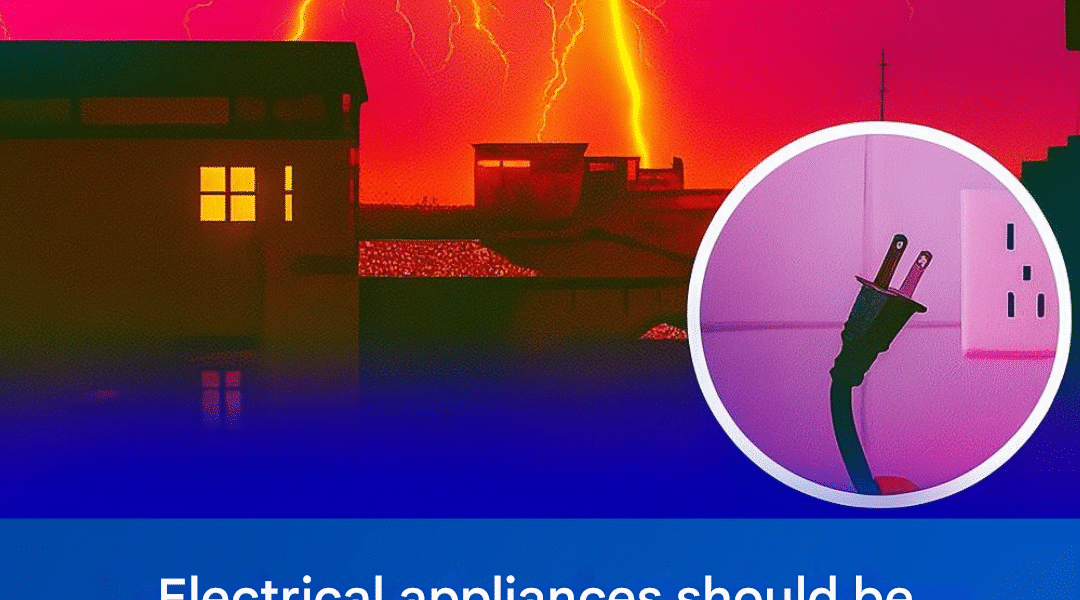
Electrical appliances that need to be unplugged during storms, thunder, and lightning
During a thunderstorm, many homes are left vulnerable to a silent but dangerous threat: electrical surges caused by lightning. These discharges can seriously damage electronic devices and even cause fires.
Although modern electrical systems include certain protections, none are foolproof against the force of lightning. That’s why one of the safest methods to protect your devices and your home is to unplug them during storms, especially when there is thunder and lightning.
Why do electrical appliances need to be unplugged when there are storms?
When lightning strikes near a power grid, it can cause a sudden surge in voltage that travels through the wires until it reaches the outlets in our homes. This discharge can burn internal circuitry from TVs, computers, refrigerators, routers, and any other connected appliances.
In addition, some storms can generate short circuits or sparks that increase the risk of fires. Although it may seem like a small act, unplugging devices can save hundreds of dollars in repairs and prevent major accidents.
What are the appliances that should be unplugged during storms, thunder and lightning?
The following devices should be unplugged as soon as the first thunder is heard or a nearby storm is detected:
- Televisions and sound
systems are very sensitive to surges. A discharge can damage the motherboard or render the screen unusable. - Computers and laptops (along with the modem/router)
Data loss or hard drive damage is common if the storm violently disrupts the power supply. - Microwaves and kitchen
appliances The digital panel and internal motor are especially vulnerable. - Refrigerators and freezers
Although they can be left plugged in during mild storms, if there is a severe thunderstorm, it is best to unplug them for a few minutes. - Video game consoles and smart TVs
are expensive and very prone to failure if they receive an indirect shock. - Chargers for cell phones, tablets, and other devices
Even if they are not in use, they can transmit the surge to the connected device.
Additional tips to protect your devices in storms:
- Install surge protectors or surge suppressors in key household outlets. They don’t replace the unplug, but they do help reduce damage if you forget to unplug something.
- Unplug everything in time: if you know a storm is coming, act before it starts.
- Avoid using mains-connected appliances during the storm, even if they are plugged into a stabilizer.
- Keep a flashlight or battery-powered lamp ready in case there is a power outage.
- Avoid contact with metal appliances or plugs while there is strong electrical activity.
Prevention is always better than cure. Disconnecting electrical appliances during thunderstorms is a simple action that can prevent significant property loss and protect the safety of the whole family.
👉 Follow our page, like 👍, and share this post. Every click can make a difference—perhaps saving your own life or that of a loved one.