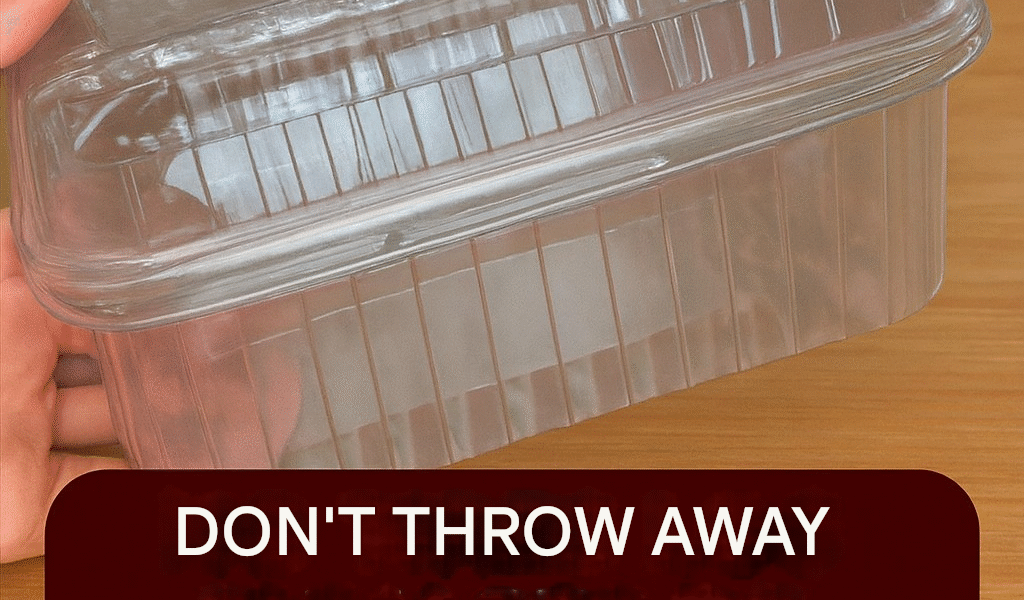
Don’t throw away those fruit and vegetable trays—they can be very useful in the kitchen!
In our daily kitchen routines, the fruit and vegetable containers we buy at the supermarket often go unnoticed. They often end up in the trash after a single use, even though they still hold enormous potential.
In times when savings and sustainability are more important than ever, learning how to reuse these containers can make a huge difference. Not only do we contribute to reducing waste, but we also find practical and creative solutions to organize our homes and make the most of our food.
This article will teach you how to properly recycle these containers and what to do with fruit and vegetable scraps, giving them a second life.
Necessary materials
- Plastic containers for fruits or vegetables (well washed and dried)
- Neutral soap and hot water
- Scourer or soft brush
- Removable labels (optional: alcohol or label remover)
- Reusable lids or closures (if available)
- Decorative stickers or heavy-duty adhesive tape
- Permanent marker
- Trays or small boxes for organizing
- Scissors or safety cutter
Step by step
- Cleaning and Preparation:
Wash containers thoroughly with hot water and mild soap; remove any food scraps or residue. Make sure they are completely dry before reusing. - Removing labels
If the containers have adhesive labels, remove them carefully. Use isopropyl alcohol or a label remover to remove sticky residue. - Decoration and Labeling
You can personalize your packaging using stickers, decorative tape, or permanent marker. This will make it more recognizable and attractive. - Practical reuse
- Kitchen storage : dry goods, spices or snacks.
- Small seed trays or pots : Make small holes in the base for drainage and use them to germinate seeds.
- Organization : stationery, buttons, screws, clips.
- Children’s portions : portions of chopped fruit or washed vegetables ready to eat.
- Content and date marking
Write down the contents and the date filled with a permanent marker for good organizational control. - Maintenance:
Periodically check the packaging for wear or cracks. If there are cracks or deformations, dispose of it responsibly or recycle the plastic.
Additional tips
Composting and reusing food scraps:
- Save fruit and vegetable scraps (peels, stems, seeds) in a container and freeze them for storage. Then use them to make homemade vegetable broths.
- Potato, carrot, pumpkin, or other skins can be turned into crispy chips: chop them finely, season them, and bake or fry them until golden brown.
- Carrot, beet, or radish stems and leaves can be used in pesto or stir-fries, providing flavor and nutrients.
Home Composting and Organization:
- To reduce waste, create a simple system in your kitchen: one jar or bag for compostable waste, and another for containers you can wash and reuse, like the ones mentioned above. If you have homemade compost or access to municipal composting, place unused vegetable scraps there.
Reusing clean fruit and vegetable containers is an easy and creative way to reduce waste and conserve resources!
👉 Follow our page, like 👍, and share this post. Every click can make a difference—perhaps saving your own life or that of a loved one.