What to do if you’re bitten by a snake and an ambulance can’t get there.
During the summer, the risk of encountering snakes outdoors increases. And although bites are uncommon, they can occur in remote locations where there is no cell phone service or immediate medical assistance. Dr. Pavel Volchkov, an infectious disease specialist and immunologist, explains what measures to take in such cases and, above all, how to prevent dangerous situations.
The best defense: prevent the encounter
According to the specialist, the best way to avoid complications from snakebites is prevention . The only truly effective treatment after a bite is the administration of antivenom, but this is not always available in remote areas. Therefore, avoiding contact is key .
Basic safety rules to avoid bites
- Avoid walking through tall grass or moving stones unnecessarily.
- Wear closed shoes, preferably with thick soles and high shafts.
- Don’t make sudden movements if you see a snake; back away slowly.
- Do not try to touch or capture it, even if it seems harmless.
- When walking through covered areas, use a stick or cane to inspect the path.
- Supervise children and pets. They are more vulnerable and can trigger a defensive reaction.
- If you are in rural areas, always carry a flashlight when walking at night.
Should I bring a first aid kit?
Yes. Although antivenom is not readily available, it is essential to carry:
- Antiseptics (chlorhexidine, alcohol, hydrogen peroxide)
- Sterile gauze, bandages, dressings
- A small knife and a flashlight
- Charged phone and whistle to call for help
Antivenom is usually found in medical centers, not in regular pharmacies. Except for snake handling experts, nobody carries it with them.
First aid if you are bitten by a snake
- Don’t panic. Fear accelerates the heart rate and facilitates the spread of the poison.
- Don’t run or walk fast. Keep the affected limb still.
- Do not use tourniquets. You could worsen circulation and aggravate the damage.
- Clean the wound with antiseptic and cover it with a clean gauze.
- Stay at rest and seek medical attention as soon as possible.
The antidote should ideally be administered within the first hour. After six hours, its effectiveness decreases and irreversible tissue damage may occur.
How can you tell if the snake was poisonous?
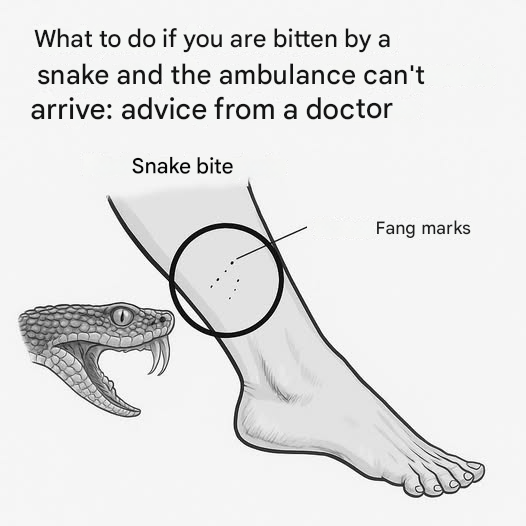
- Venomous snakes usually leave two well-defined fang marks .
- Non-poisonous ones leave more diffuse traces, similar to scratches.
- The moment of the bite may not hurt much, especially if it happens over clothing.
Why are some cases mild and others severe?
- The amount of venom depends on whether the snake has already bitten before or if it released its entire reserve in the attack.
- Running, moving around a lot, or panicking facilitates the spread of the poison.
- The person’s age and general health also influence the reaction to the poison.
Types of poison and their effects
- Hemotoxic : like those of the viper, they cause tissue damage, necrosis and coagulation problems.
- Neurotoxins : like those of cobras, they affect the nervous system and can paralyze breathing.
In rural areas of South America, hemotoxic poisons are prevalent. Although rarely fatal, they can cause serious long-term effects if not treated promptly.
Can the poison be extracted by suction?
No. This is a dangerous myth . Sucking out the venom is not only useless, but it can worsen the wound and cause infections. Furthermore, if the person sucking it out has open sores in their mouth, they are also exposing themselves to the venom.
Never try to cut, suck, or burn the wound. These practices are outdated and harmful.
Possible consequences after the bite
Although fatal cases from viper bites are very rare, they can occur:
- Severe swelling
- Tissue necrosis
- Changes in skin color (purple, black)
- Difficulty moving the limb
- In older people, deep scarring or skin retraction may occur.
Tips and recommendations
- Avoid high-risk areas without preparation.
- Always let someone know before going for a walk in rural areas.
- Wear appropriate clothing and footwear.
- Don’t lift stones or branches unnecessarily.
- Stay calm if an accident occurs and seek medical help immediately.
- Do not attempt to resolve the situation on your own without knowledge.
Acting quickly and calmly can make all the difference. Prevention and immediate attention are the best defenses against a snakebite.
👉 Follow our page, like 👍, and share this post. Every click can make a difference—perhaps saving your own life or that of a loved one.