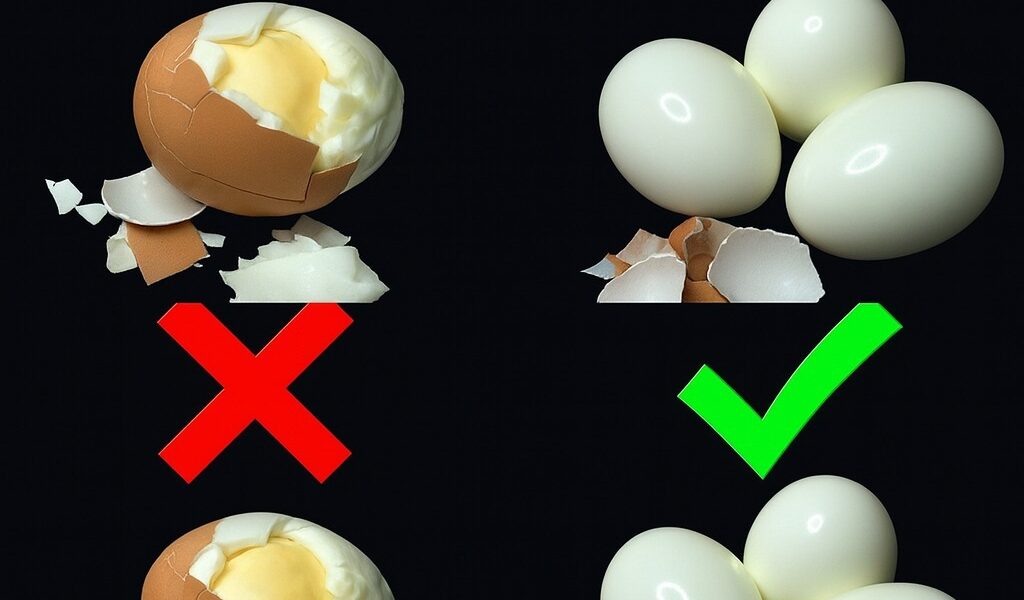
How to boil eggs so they peel easily
Boiling eggs seems like a simple task, but getting them to come out without cracks and with easily removable shells requires a little technique. Fortunately, with these very simple steps you can obtain perfectly cooked eggs, ideal for recipes, salads, or as a healthy snack.
Key steps
- Choose eggs that have been refrigerated for a few days.
Eggs that have been in the refrigerator for 7 to 10 days are ideal for boiling. Fresher eggs often have the membrane tightly adhered to the shell, making them difficult to peel. - Prevent cracks by preheating them.
Before boiling, let the eggs sit at room temperature for 10 to 15 minutes. You can also add a pinch of salt or a splash of vinegar to the water to help seal any small cracks.
Bare:
Gently tap each egg on a surface to crack the shell, roll it to crack it completely, and begin peeling from the wider end. Doing this under a stream of cold water will make the process even easier and cleaner.
Storage:
Store hard-boiled eggs in their shells in a sealed container in the refrigerator for up to a week. If you’ve peeled them, consume them preferably the same day or keep them in a container with a damp towel in the refrigerator.
Additional tips
- Cold water → boil → stand technique:
Place the eggs in a pot and cover them with cold water. Bring the water to a boil, remove from the heat, cover the pot, and let the eggs stand in the hot water for the desired time (generally 10 to 12 minutes for hard-boiled eggs). Then, transfer them to an ice bath to stop the cooking process and make peeling easier. - Cooking time according to desired doneness: Soft-boiled eggs (jammy) 6 to 7 minutes. Creamy hard-boiled eggs 10 to 12 minutes.
- The ice bath is essential.
Submerging eggs immediately after cooking them in ice water not only stops the cooking process but also helps the shell to peel off easily. - Avoid a greenish tint in the yolk.
Overcooking can cause a gray or greenish hue around the yolk. To prevent this, cook carefully and use a cold water bath to stop the cooking process. - How to peel them without ruining the egg:
Gently crack the shell on a flat surface, roll the egg to crack it completely, and start peeling from the wider end where there is usually an air cell. Peeling under a stream of cold water also makes the process easier. - Proper storage:
Store whole cooked eggs in their shells in the refrigerator, in a sealed container, for up to one week. If they are already peeled, keep them in an airtight container with a damp towel and consume them as soon as possible.
With this guide you can cook eggs without cracks and peel them easily, making the most of their flavor, texture and versatility both for recipes and for enjoying them on their own.