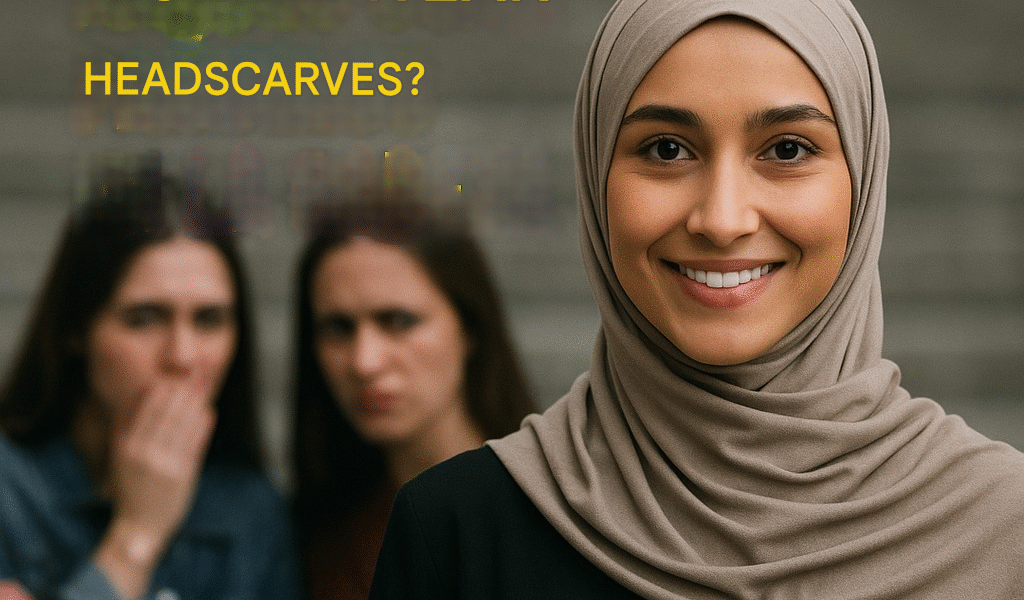
Why do Arab women wear headscarves?
The use of headscarves by Arab women is an image that sparks curiosity in many cultures. For some, it is a religious symbol; for others, a cultural tradition; and it is also associated with identity and self-respect.
However, behind this everyday gesture lie centuries of history, spiritual and social meanings that explain why it remains such a widespread practice in various countries of the Arab and Islamic world. Understanding the background of this custom not only helps us better understand a culture, but also helps to break down prejudices and promote tolerance.
Why do Arab women wear headscarves?
The use of the headscarf, known as the hijab , has both religious and cultural roots. In Islamic tradition, covering the head symbolizes modesty, respect, and devotion. The Quran encourages both men and women to dress modestly, and the headscarf is one of the ways many Muslim women put this principle into practice.
However, reducing it solely to religion would be to oversimplify a complex reality. The hijab is also a sign of cultural identity, pride, and, in many cases, personal choice. While in some countries it is legally required, in others it is a personal decision based on spiritual, familial, or social convictions.
Religious and spiritual meaning
For women who use it from a religious perspective, the headscarf is a constant reminder of their faith. It represents an act of obedience to God and, at the same time, a way to reinforce spirituality in daily life. Just as other religions have symbols of modesty (such as the veil in traditional Christianity or the head covering in Orthodox Judaism), in Islam the hijab occupies a central place.
Cultural and social identity
In many Arab countries, the headscarf has been part of the culture for centuries. Beyond religion, it has become an element that conveys ethnic pride, belonging, and tradition . A woman can wear it as a way to express her connection to her community or as a way to distinguish herself from Western influence.
Diversity in its use
Not all Arab women use it in the same way, and not all of them interpret it the same way either.
- In some countries such as Saudi Arabia or Iran, the use of the veil is mandatory by law.
- In others, such as Morocco, Lebanon or Egypt, the decision is usually left to personal discretion.
- Styles also vary: hijab, niqab, chador, burka… each with a different level of coverage, adapted to local tradition and individual preference.
Should all women wear it? What happens if they don’t?
Not all Arab women are required to wear a headscarf. This largely depends on the country they live in, the level of religiosity in their family, and their own personal choice.
- In countries where it is mandatory by law , such as Iran or Afghanistan, not using it can have legal or social consequences: fines, arrests, and even reprisals.
- In Muslim-majority countries with more flexible laws , such as Egypt, Lebanon, or Jordan, many women choose not to wear it and do not suffer penalties, although they sometimes face criticism or social judgment.
- In Western Muslim communities , it is mostly a personal choice. Some use it as an affirmation of identity, while others choose not to.
Therefore, it cannot be said that all Arab women must wear it. Rather, it is a mix of religion, culture, local laws, and individual freedom. What is certain, however, is that in many contexts not wearing it can lead to stares, criticism, or even penalties, depending on the place and the community.
Tips for dealing with someone who uses a headscarf
When interacting with a woman wearing a headscarf, it’s important to act respectfully and naturally .
- Avoid making assumptions : not everyone uses it for the same reasons. It could be due to religion, culture, or personal choice.
- Don’t see it as a limitation : many women see the headscarf as a symbol of strength and identity, not as an obstacle.
- Be respectful in your interactions : avoid comments about whether she should “take it off” or invasive questions that may make her uncomfortable.
- Value diversity : recognizing cultural differences is a way to enrich coexistence and break down prejudices.