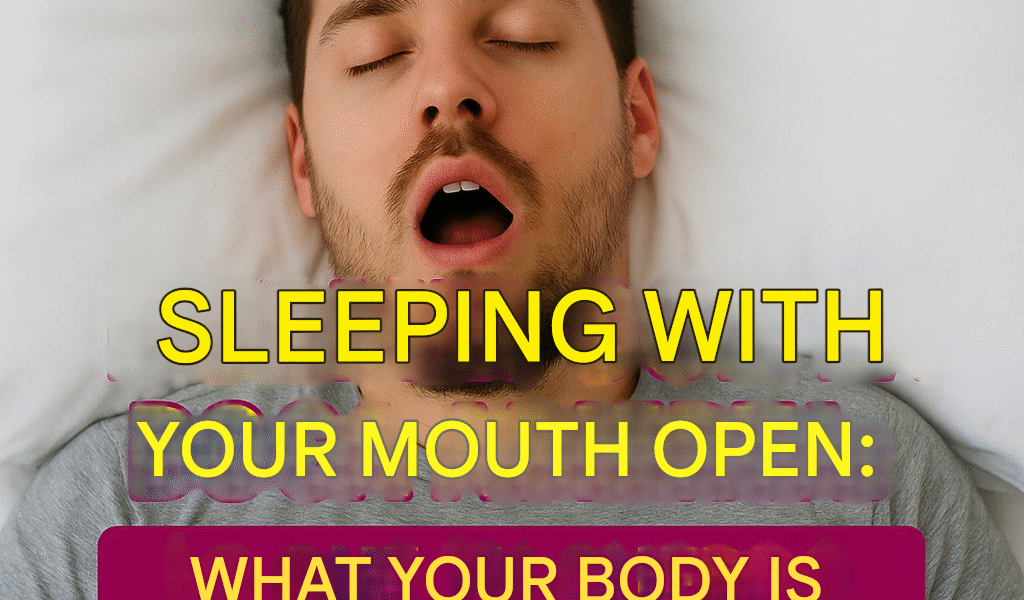
Sleeping with your mouth open: what your body is trying to tell you without you knowing
Sleeping seems like one of the simplest and most natural activities, but our bodies use those hours of rest to send signals about our health. Something as common as sleeping with your mouth open might go unnoticed, but behind this habit lie important clues about our physical well-being.
It’s not just about an uncomfortable posture or annoying snoring, but a silent message that the body is trying to send us.
What does it mean to sleep with your mouth open? What your body is trying to tell you
When someone sleeps with their mouth open, it’s usually not just a coincidence. The body often does this for a physiological reason or due to a problem that needs attention. Below, we explore the most frequent causes:
1. Nasal congestion
If the upper airways are blocked by colds, allergies, or a deviated septum, the person cannot breathe properly through the nose and the body resorts to the mouth as an emergency route.
2. Sleep apnea
Sleeping with your mouth open can be a sign of obstructive sleep apnea , a disorder in which breathing is repeatedly interrupted during the night. This problem, more serious than it may seem, can lead to chronic fatigue and affect the heart.
3. Incorrect breathing habits
Some people develop the habit of breathing through their mouths even while awake. This can be due to poor posture, stress, or a habit acquired in childhood.
4. Swollen tonsils or adenoids
In children and adults, enlarged tonsils and adenoids make it difficult for air to pass through the nose, forcing the mouth to compensate.
5. Poor sleep quality
Sleeping with your mouth open is not just a symptom: it also generates consequences, such as dry mouth, cavities, bad breath and frequent awakenings that prevent restful sleep.
Consequences of sleeping with your mouth open
Dehydration and dry mouth
Breathing through the mouth for hours dries out the mucous membranes and reduces saliva production, increasing the risk of infections and dental problems.
Sleep disturbances
Those who sleep like this tend to snore more and have a less deep sleep, which translates into tiredness the next day.
Oral health problems
Sleeping with your mouth open promotes the appearance of cavities, bad breath and inflamed gums , due to the lack of natural lubrication that saliva provides.
Tips for correcting this habit
- Keep your airways clean : use nasal washes with saline solution if you suffer from allergies or frequent colds.
- Pay attention to your sleeping posture : try to sleep on your side and not on your back, to reduce the possibility of snoring and opening your mouth.
- Stay hydrated before bed : drinking water helps prevent excessive dryness.
- Consult a specialist : If the problem is persistent, an ear, nose and throat (ENT) doctor or a sleep specialist can identify causes such as sleep apnea.
- Take care of your oral hygiene : brush your teeth and use mouthwash before bed to minimize the effects of dryness.
Sleeping with your mouth open isn’t just a minor detail: it’s your body’s way of telling you something isn’t working properly. Paying attention to these signals and acting promptly can make the difference between restful sleep and undetected health problems.