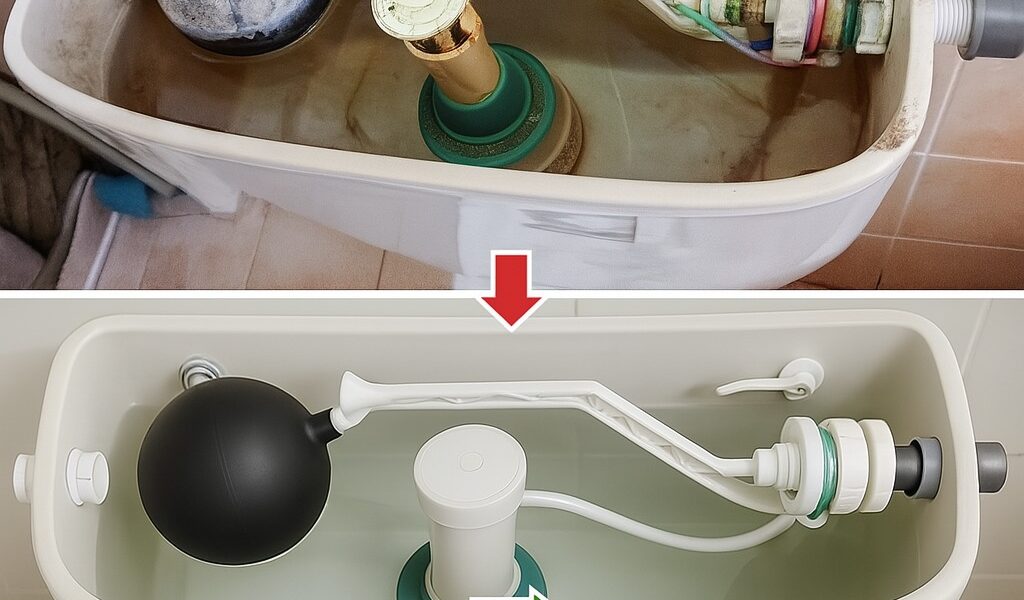
How to Disinfect and Clean the Toilet Tank, and Make It Look Like New.
Many people strive to keep their bathroom clean and smelling fresh, but they often forget an essential part: the toilet tank. Although hidden, it’s a key component in the toilet’s operation. Residue, limescale, mold, and hard water accumulate there silently, affecting the mechanism’s performance and generating unpleasant odors. Fortunately, you don’t need expensive or harsh products to clean it. With white vinegar and a little dedication, you can restore it to its original condition.
Why is it so important to clean the toilet tank?
Think about cleaning only the exterior of your car without checking the engine. That’s how it works when we neglect the toilet tank. This part stores the water used for each flush, and over time it can accumulate impurities that hinder its function. This can lead to small leaks, annoying noises, or even an increase in water consumption without you noticing.
What you’ll need
There’s no need to buy chemicals or complicated tools. You only need:
- Cleaning gloves
- A clean sponge
- A toilet brush (preferably new or dedicated to this task)
- An empty spray bottle
- White cleaning vinegar (inexpensive and natural)
Step-by-step instructions for cleaning the tank
- Turn off the water supply valve , located near the toilet.
- Flush to completely empty the tank.
- Fill the spray bottle with white vinegar (about 250-300 ml) and spray generously inside the tank.
- Let it sit for 2 to 3 hours , or overnight if you can
- Scrub the inside walls of the tank with the sponge to remove limescale and mold.
- Use the brush to reach deeper areas, such as corners and the bottom of the tank
- Rinse with a little clean water and open the water valve to refill the tank.
Additional benefits of this cleaning
A clean tank improves the overall performance of the toilet: the flush is more efficient, annoying noises are reduced, and there are no unpleasant odors. White vinegar acts as a natural disinfectant and leaves a fresh feeling without toxic chemicals.
Practical tips:
- Repeat this procedure every 2 or 3 months to keep the system in optimal condition.
- If the limescale is heavily encrusted, you can warm the vinegar slightly before applying it (be careful not to burn yourself).
- If you live in an area with very hard water, consider using vinegar more often or combining it with baking soda to enhance cleaning.
- Always wear gloves and use tools reserved for this type of cleaning, for hygiene and safety.
- Avoid using products containing chlorine in this part of the bathroom, as they can damage the internal parts of the flushing system.
Although you may not see it, the toilet tank deserves the same care as any other part of the bathroom. A little regular effort can help you avoid repairs, bad odors, and wasted water. Your bathroom will not only look cleaner, it will function better.
👉 Follow our page, like 👍, and share this post. Every click can make a difference—perhaps saving your own life or that of a loved one.