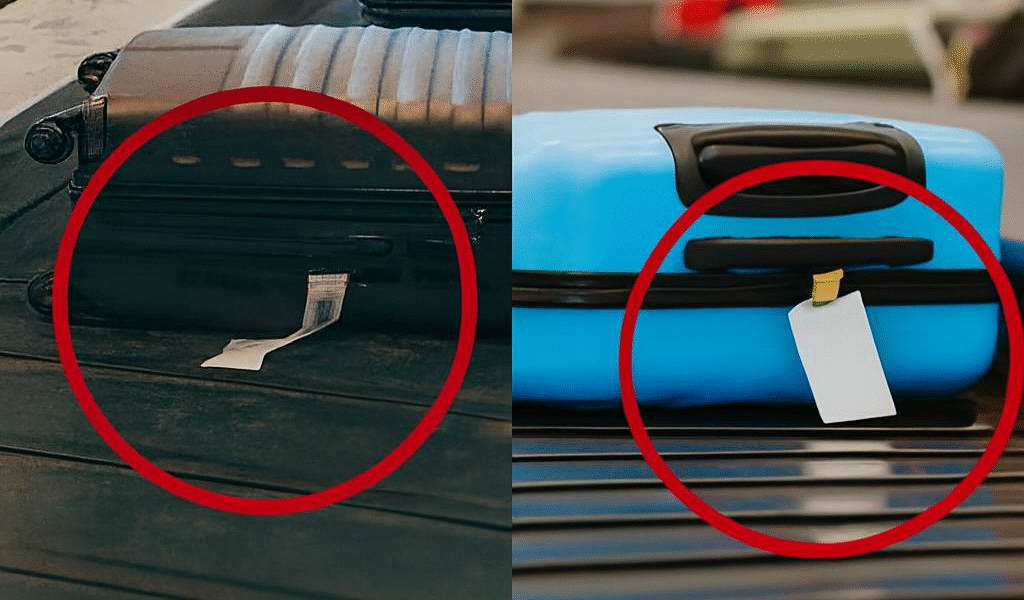
When traveling by plane, be careful not to write these words on your checked luggage
When traveling by plane, many details may seem insignificant, but they actually have a big impact on the security of your belongings. One of those details is what you decide to write or put on your checked baggage tag.
While it might seem like a good idea to provide certain information to protect your belongings, the truth is that you could be attracting the wrong kind of attention.
What you shouldn’t write in your suitcase
Many travelers believe that adding phrases like “fragile” , “valuable” , “handle with care” , or even “electronics” , can help ensure that luggage receives more careful treatment.
However, according to experts and airport employees, this type of labeling can have the opposite effect.
Why avoid words like “valuable” or “fragile”?
Labeling your suitcase with the word “valuable” can make it a target for theft. Airport staff, baggage handlers, or malicious individuals might assume it contains electronics, jewelry, or other expensive items.
This not only increases the risk of your suitcase disappearing, but also the risk of it being opened or tampered with.
The same applies to labels like “fragile .” While many believe this will lead to luggage being handled more carefully, the truth is it can have the opposite effect. Some employees say that, in practice, these labels don’t change how bags are handled, and in some cases, they may even be completely ignored.
What information you should include (and how to protect it)
While it’s helpful to have contact information on your luggage in case it gets lost, you should be careful about what information you share. Here are some key points:
- City and state, instead of full address : It’s sufficient to indicate the city and state or province where you reside. Including the exact address can expose your residence to unnecessary risks, especially if it’s known that you’re out of town.
- Alternative phone number : Instead of your personal number, consider using a work number, a temporary number, or the number of a trusted family member. This prevents unwanted contact or misuse.
- Use email with caution : Email addresses can also be used for scams or spam. If you choose to include one, opt for a secondary account instead of your primary address.
- Never include confidential information : Never write your passport number, personal identification number, or Social Security number. This information is extremely sensitive and can be used for identity theft.
Additional recommendations to protect your luggage:
- Use TSA-approved locks : They are secure and can be opened by authorities without damaging your suitcase.
- Do not pack valuables in your checked luggage : Carry important items, such as electronic devices, money, jewelry, or documents, in your hand luggage.
- Personalize your luggage visually : Use eye-catching covers, straps, or identifiers to easily recognize it without revealing its contents.
- Take a picture of your suitcase before your trip : This will help if you need to report a loss or damage.
Summary
When it comes to travel, discretion is your best ally. Avoiding flashy terms and limiting personal information on your checked luggage can protect you from theft, loss, and even identity theft. Use only what’s necessary to facilitate a possible return, without compromising your security.