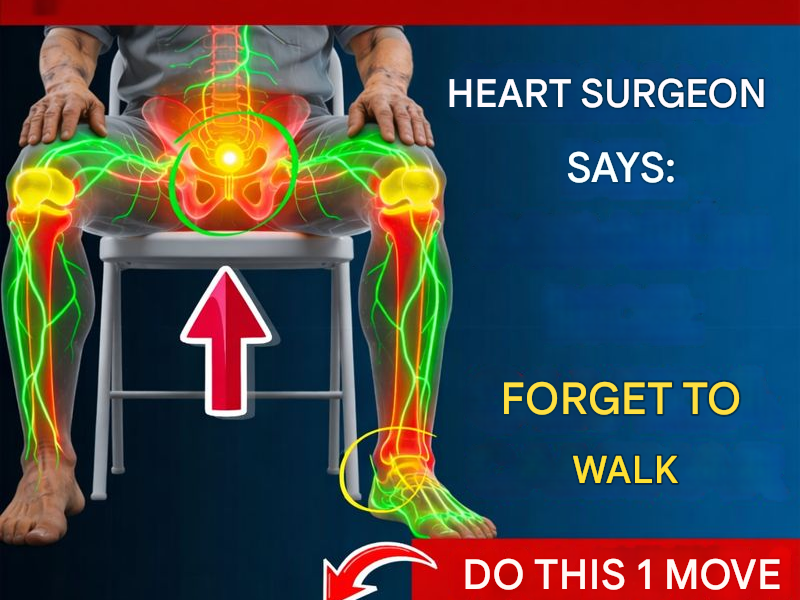
Are you over 60? A chair exercise that many people incorporate into their routine.
For years we were told the same idea: to be healthy you have to walk a lot, comply with the famous 10,000 steps a day and endure even if the pain appears. However, after age 60, this recommendation is not always the best option. In fact, for many people it can become a silent problem for the knees, hips, and back.
With the passage of time, the body changes. The cartilage becomes thinner, the menisci lose elasticity and the muscles no longer absorb impacts as they used to. Walking long distances on hard asphalt means that each step sends a direct force to the joints, multiplying body weight and accelerating wear and tear. If there is also osteoarthritis, morning stiffness or muscle weakness, the pain does not take long to appear.
The good news is that moving is still essential, but the key is how to do it. This is where a smarter strategy comes into play: chair exercise. By performing seated movements, the impact of body weight on the joints is eliminated, allowing you to strengthen muscles, improve circulation and maintain mobility without punishing knees or hips.
Why Chair Exercise Is So Effective After 60
By sitting down, you take gravity out of the equation. This allows you to work your muscles safely, activate your joints’ natural lubrication and improve your balance without the risk of falling. It is not about “doing less”, but about doing better.
This routine is based on four simple, but very powerful exercises, which can be done at home, without equipment and in a few minutes a day.
1. Knee extensions: the protective shield of your joints
This exercise strengthens the quadriceps, the key muscle for stabilizing the knee and absorbing shock.
How to do it:
- Sit on the edge of the chair, back straight.
- Slowly lift one leg until it is straight.
- Hold the position for 2 to 3 seconds by squeezing your thigh.
- Lower yourself slowly and repeat.
This movement not only strengthens the muscle, but also stimulates the synovial fluid, helping to “lubricate” the joint from within.
2. Heel raises: activating the “second heart”
The calves play a vital role in circulation. When they weaken, swollen feet, cramps, and a feeling of heaviness appear.
How to do it:
- With your feet flat on the floor, raise your heels.
- Hold up for a second and lower controlling.
- Repeat several times.
This exercise improves circulation, reduces swelling and also contributes to balance, which is key to preventing falls.
3. Seated walking: safe cardio and mental coordination
Cardio doesn’t have to be dangerous. Seated walking raises the pulse, oxygenates the body and also stimulates the brain.
How to do it:
- Lift one knee while raising the opposite arm.
- It alternates rhythmically.
- Keep breathing steady.
This crossover pattern improves brain-body coordination, helping to maintain reflexes and mental agility.
4. Sitting and standing: the exercise of independence
The ability to get up from a chair without assistance is one of the best indicators of autonomy in old age.
How to do it:
- Lean your body forward.
- Push through your heels and stand up.
- Sit slowly and controllably.
You can start by using your hands and eventually try to do it without support. This exercise strengthens legs, buttocks, abdomen and lower back.
Tips and recommendations
- Do the routine every day, even if it’s just 10 minutes.
- Prioritize slow, controlled movements.
- Breathe naturally, never hold your breath.
- If sharp pain appears, reduce the range or rest.
- Muscle discomfort is normal; the stabbing pain does not.
After 60, health does not depend on suffering or forcing the body. It depends on choosing smart strategies. Chair exercise proves that it is possible to gain strength, mobility, and confidence without damaging your joints. With consistency and proper movements, the body responds. It is not a question of intensity, but of continuity. Your future independence starts with small decisions you make today.
👉 Follow our page, like 👍, and share this post. Every click can make a difference—perhaps saving your own life or that of a loved one.