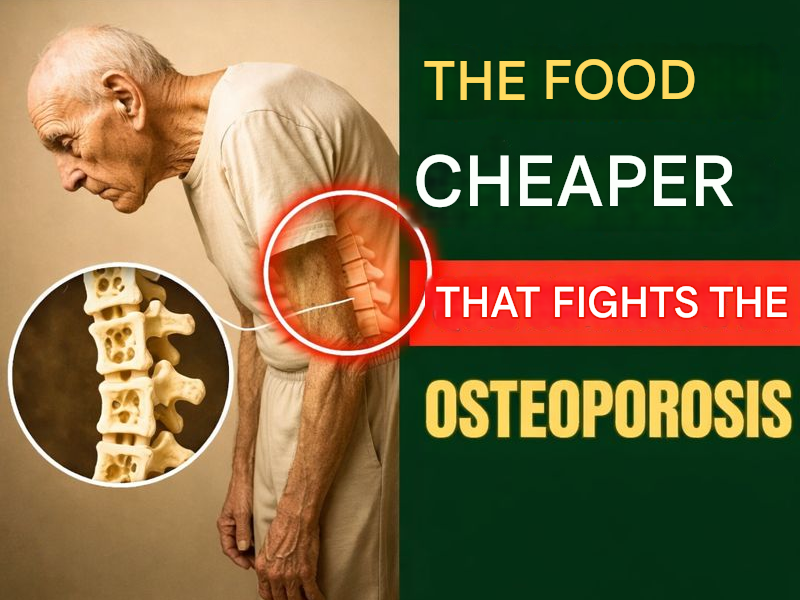
The inexpensive food that many seniors include to support their bones after 60.
Many people wake up each morning with an unsettling feeling: creaking knees, fear of tripping, insecurity when walking, and the certainty that their bones no longer respond as they once did. What few know is that bone health does not depend only on age, but on daily decisions that are made – or ignored – in food.
There is an extremely common, cheap, and accessible food that most have overlooked their entire lives, not knowing that it can be more effective than many expensive supplements. While the industry promotes imported pills and artificial formulas, the real solution has always been in the kitchen, used for generations.
Osteoporosis is not a problem exclusive to very old people. Every few seconds, someone in the world suffers a fracture related to weakened bones, many of which could have been avoided with simple, sustained dietary changes. The difference between losing mobility or maintaining it is often in what you eat regularly.
Here are six key foods, ordered from least to most impactful, that can transform your bone health naturally.
6. Canned Sardines: Real and Bioavailable Calcium
Sardines are often forgotten in the canning aisle, but they are a real nutritional gem. When consumed with their edible bones, they provide a higher amount of calcium than a glass of milk, along with natural vitamin D and phosphorus.
This set is critical, as calcium without vitamin D is not absorbed properly. In addition, sardines provide high-quality proteins that strengthen muscles, which is key to preventing falls and fractures.
How to eat them:
Choose sardines in water or olive oil. You can add them to salads, pastas, avocado toast or eat them with lemon and onion. Twice a week is enough to notice benefits.
5. Sesame Seeds: Small But Mighty
Sesame seeds are one of the foods with the highest concentration of calcium per gram. Three tablespoons a day provide an amount comparable to a glass of milk, without lactose or additives.
In addition, they contain magnesium and phosphorus, essential minerals for calcium to be properly fixed in the bones. Without magnesium, much of the calcium is lost unused.
How to use them correctly:
Toast them lightly and grind them. Consuming them ground greatly improves absorption. Sprinkle the powder over salads, rice, soups, or oatmeal. You can also make homemade tahini.
4. Broccoli: The Silent Guardian of Calcium
Broccoli is an excellent source of vegetable calcium, but its greatest value is in vitamin K, essential for directing calcium to the bones and preventing it from being deposited in arteries.
It also contains anti-inflammatory compounds that protect joints and bone tissue.
Common mistake: overboiling it.
Correct way: Steam for 5 to 7 minutes, until bright green and slightly crisp. Adding lemon or olive oil further improves nutrient absorption.
3. Almonds: Dairy-free calcium
A handful of almonds daily provides calcium, magnesium, vitamin E and healthy fats that promote the absorption of essential nutrients.
They are convenient, easy to carry and help keep blood sugar levels stable, as well as benefiting the heart.
How to eat them: raw or lightly toasted, without salt or frying. They can also be used to make homemade plant-based milk.
2. Black Beans: The Structure of the Skeleton
If calcium is cement, the minerals in beans are bricks. Black beans provide large amounts of magnesium, phosphorus, and vegetable protein, which are essential for maintaining strong bones and muscles.
Diets rich in legumes are associated with a lower risk of osteoporosis, especially in the spine and hip.
Digestive advice: cooking them with bay leaf and cumin improves digestion and reduces gas.
1. Homemade Bone Broth: The Most Powerful Food
Bone broth is, without a doubt, the most complete and economical food for bone health. It contains natural collagen, calcium, phosphorus, magnesium and amino acids that strengthen bones, cartilage, tendons and ligaments.
Collagen acts as the “glue” that keeps the bone structure flexible and resilient. Regular consumption is associated with less joint pain and better bone density.
How to make it:
Boil beef, chicken, or fish bones over low heat for at least 6 hours. Add a splash of vinegar or lemon to extract more minerals. Strain and preserve the broth to consume several times a week.
How to incorporate them without complication
It is not necessary to change your entire diet from one day to the next. You can start simply:
- Breakfast: oatmeal or fruit with ground sesame and almonds
- Lunch: steamed broccoli and beans
- Snack: sardines or nuts
- Dinner: a cup of hot bone broth
The key is consistency, not perfection.
Tips and recommendations
- Always combine calcium with magnesium and vitamin D
- Avoid excess salt and fizzy drinks, as they weaken bones
- Do gentle physical activity with a load, such as walking or climbing stairs
- Maintain good hydration
- Consult a health care professional if you have previous medical conditions or take medication
Taking care of your bones doesn’t require expensive products or complicated solutions. It requires going back to the simple, to real foods that have strengthened entire generations. Small daily changes can give you back mobility, safety and quality of life. The decision you make today can make a difference for many years to come.
👉 Follow our page, like 👍, and share this post. Every click can make a difference—perhaps saving your own life or that of a loved one.