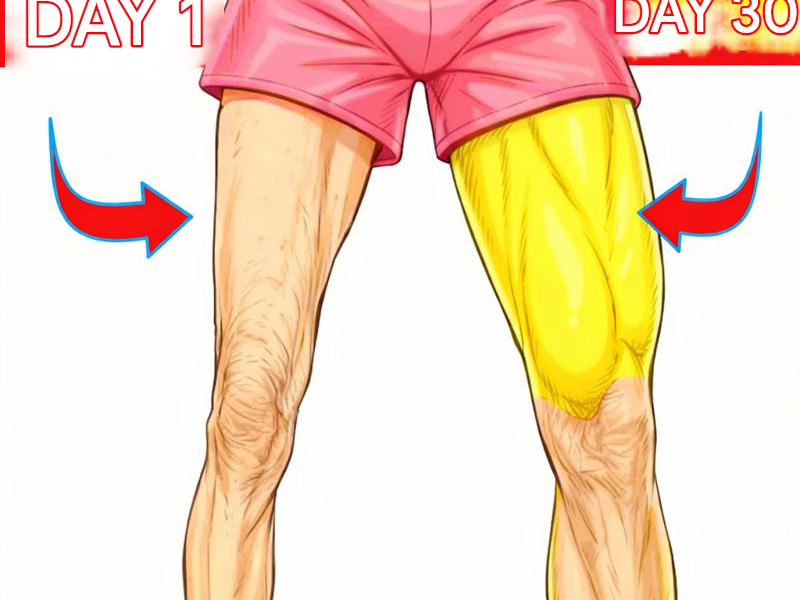
After 60: Ditch the Squats and Do These 3 Safer Exercises.
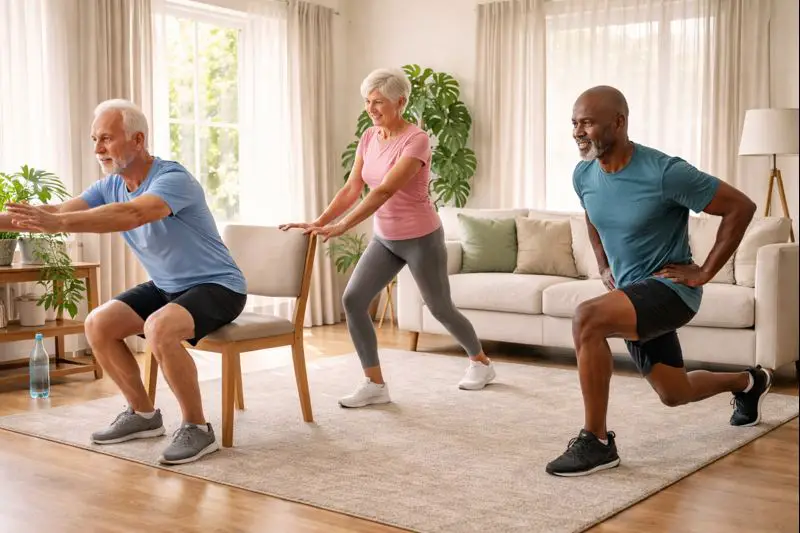
From the age of 60, the body changes and so should exercise routines. Movements that once seemed harmless, such as deep squats, can start to cause discomfort in the knees, hips, or lower back. This does not mean to stop training the legs, but to train them in a smarter, safer and more functional way.
The real goal after 60 is not to lift more weight, but to maintain the strength needed for daily life, improve balance, and prevent falls. Here are three exercises that are safer and more effective than traditional squats, especially recommended for this stage of life.
1. Sitting down and getting out of the chair
The most practical and safest alternative to the squat
This exercise works the same muscles as a squat—thighs, glutes, and core—but with much less stress on your knees. In addition, it reproduces a movement that we perform several times a day, which makes it especially functional.
Key Benefits
- Strengthens legs and buttocks in a controlled way
- Improves mobility and confidence when moving
- Protects joints by preventing forced ranges
How to do it
- Sit in a firm chair, with your feet flat on the floor and hip-width apart.
- Lean your torso forward slightly.
- Engage your abdomen and push through your heels to slowly pull yourself up.
- Pause briefly above and sit down again in a controlled manner.
Recommendation: 8 to 12 reps, 2 to 3 sets.
If it’s difficult, gently support yourself with your hands. If it’s easy, slow down the movement or add a pause before you sit down.
2. Split Stance with Support
Strength and balance at the same time
One of the biggest risks after 60 is not a lack of strength, but a loss of balance. This exercise trains both aspects at once, something that traditional squats do not achieve.
Why it’s so important
- Strengthens stabilizing muscles of the hips and ankles
- Trains the nervous system to react better
- Reduces the risk of falls
How to do it
- Position yourself near a wall or chair for support.
- Put one foot forward and keep the other behind, well supported.
- Keep your torso upright and your abdomen active.
- Hold the position for 15 to 30 seconds breathing normally.
- Switch legs.
Recommendation: 2 to 3 rounds per side.
If it’s easy, increase the time or shift your weight a little more to your front leg.
3. Lunge back to the chair
The Exercise Preferred by Many Doctors After 60
This movement noticeably reduces the load on the knee compared to squats, while also strengthening legs, glutes, and core. In addition, it mimics real actions such as backing up, sitting down, or regaining your balance.
Key benefits
- Reduced joint compression
- Greater control of movement
- Functional training to prevent falls
How to do it
- Stand in front of a stable chair.
- Step back with one leg and slowly lower yourself until your hips touch the chair.
- Push through your front heel to come back up.
- Keep your torso upright and your abdomen active.
Recommendation: 6 to 10 reps per side, 2 to 3 sets.
If balance is a challenge, use one-handed support. If it’s easy, slow down the descent or add a pause.
Final Tips and Recommendations
- Do the exercises 3 to 4 times a week, it is not necessary to do them all on the same day.
- Always prioritize motion control, not speed.
- If you feel joint pain (not to be confused with muscle strain), stop and adjust the exercise.
- Keep breathing fluid: exhale when exerting, inhale when returning.
- Combine these exercises with gentle walking and daily stretching.
- In the event of significant joint problems or previous surgeries, consult a health professional.
After 60, training well is more important than training hard. These three exercises strengthen your legs, improve balance, and protect your joints, helping you maintain independence and security in your daily life without the unnecessary risk of traditional squats.
👉 Follow our page, like 👍, and share this post. Every click can make a difference—perhaps saving your own life or that of a loved one.