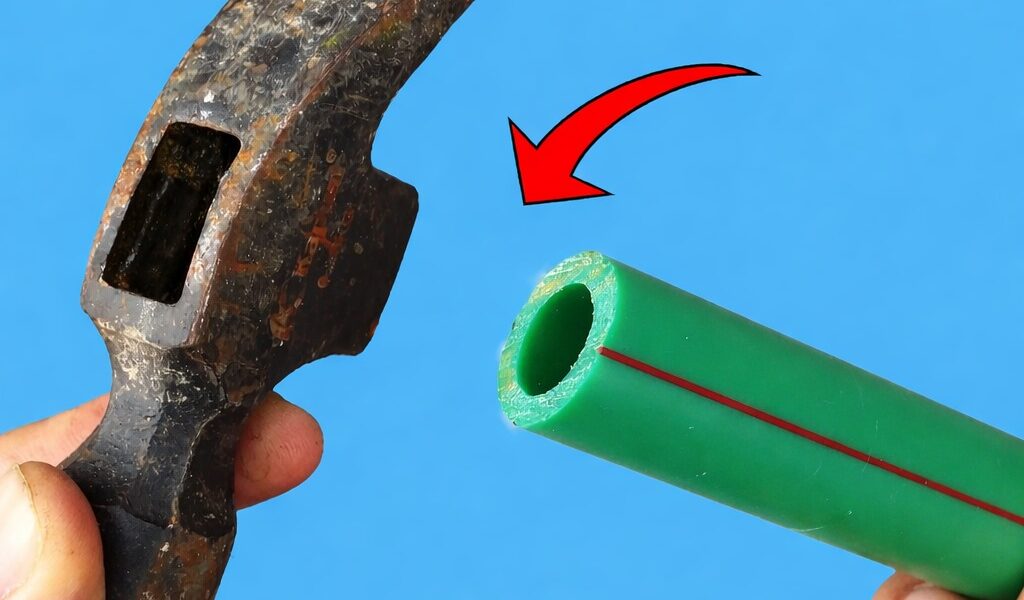
Don’t throw away your PVC pipe! I’ll teach you how to make a PVC hammer handle

Throwing away old PVC pipes is a common habit, but also a missed opportunity. These materials, which are often forgotten after a work or repair, can be transformed into useful and resistant tools. One of the most practical uses is to turn a PVC pipe into a durable, economical and functional hammer handle.
In this article, you’ll learn how to take advantage of that PVC you already have at home to extend the life of your hammer, save money, and reduce waste, all with a simple DIY method.
Why use PVC for a hammer handle?
PVC is a lightweight, moisture-resistant and easy-to-work material. Unlike wood, it doesn’t rot or crack easily, and well prepared it can offer a firm and comfortable grip. In addition, reusing it avoids unnecessary expenses and encourages a more sustainable approach to home DIY.
Among its main advantages are:
- High resistance to daily use
- Low cost (reused material)
- Easy to cut and shape
- Good durability in humid environments
Materials Needed
For this project you don’t need to buy anything special. Materials are kept simple and accessible:
- An old PVC pipe (the right diameter for the hammer)
- Hammer with damaged handle or no handle
- Heat source (heat gun or hot water)
- Cutting tool (saw or hand saw)
- Work gloves
- Strong adhesive or resin (optional, for firmness)
Step by step: how to make the hammer handle with PVC
- Prepare the PVC
pipe Cut the pipe to the approximate length of the original hammer handle. Make sure the size is comfortable for your hand and balanced for use. - Soften the PVC
Apply heat in a controlled manner so that the PVC becomes slightly flexible. This will allow it to be better adapted to the hammer head and improve the fit. - Attach the hammer
head Insert the hammer head into the pipe while the PVC is still hot. Carefully adjust until firm. - Adjust and cool
Allow the PVC to cool completely to regain its rigidity. At this point, the handle will be solid and stable. - Optional reinforcement
If you want extra security, you can apply a strong adhesive on the inside before assembly or add an internal filler to reduce vibrations.
End result and use
Once finished, you’ll have a sturdy, lightweight, and functional hammer handle, ideal for DIY and household work. Not only will you have recovered a useful tool, but you will also have given a second life to a material that is normally discarded.
This type of solution shows that, with creativity, many everyday objects can be reused in a practical and efficient way.
Final recommendations
- Wear gloves during PVC heating to avoid burns.
- Always check that the handle is securely in place before using the hammer.
- If the hammer is heavy-duty, reinforce the inside of the handle.
- Preserves PVC residues: they can be used for many other useful projects.
Reusing not only saves money, it also improves your skills and reduces waste. A simple PVC pipe can become a reliable tool when you know how to take advantage of it.
You can also see the procedure in the following video from the Gaus DIY channel:
👉 Follow our page, like 👍, and share this post. Every click can make a difference—perhaps saving your own life or that of a loved one.