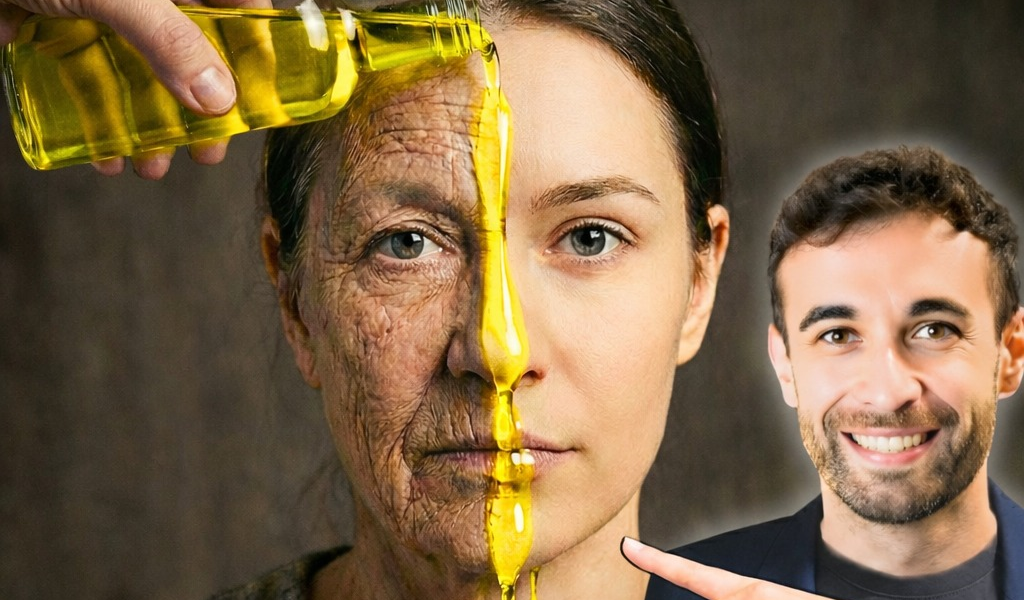
A natural oil that helps improve the appearance of fine lines and how to apply it correctly.

More and more people are looking for natural alternatives to smooth fine lines and improve the firmness of the face. However, not all oils work the same, and using them incorrectly can lead to the opposite effect: clogged pores, excess shine or irritation.
The key is not only in choosing the right oil, but in understanding what your skin needs, how each oil works and how to apply it correctly. Below, I explain which ones do work, which ones should be avoided and which is number one when it comes to skin regeneration.
Jojoba oil: balance and smart protection
Although it’s known as oil, jojoba is actually a liquid vegetable wax. This difference is fundamental, because its structure is very similar to the skin’s natural sebum.
This makes it easy for the skin to recognize and integrate it without resistance, even in combination or oily skin.
What benefits does it bring?
- Reinforces the natural protective barrier.
- Helps prevent excessive fat production.
- Seals in moisture without feeling sticky.
- Does not saturate pores.
How to use it correctly
Apply 2 to 3 drops to clean, slightly damp skin. Warm the product between the palms of your hands and gently press it onto your face. It absorbs quickly and is ideal for the morning routine.
A great advantage is that it resists oxidation well, so it does not lose properties easily.
Grapeseed oil: lightness and dry finish
If you feel that many oils are too heavy for your face, grapeseed oil is an excellent alternative. Its high content of linoleic acid gives it a fluid and light texture.
Key Benefits
- Dry finish and lightweight feel.
- Helps protect the skin from environmental stress.
- Provides antioxidant vitamin E.
- Visual effect of more refined pores.
How to apply
Use 3 drops, warm them slightly and apply them by dab them to damp skin. It’s great for daytime, especially if your skin tends to glow easily.
Castor Oil: When to Avoid It and How to Use It Carefully
Castor oil is known for its use on eyebrows and eyelashes, but applying it directly to the face can be a mistake, especially on acne-prone skin.
Its texture is extremely dense and can create an excessive occlusive effect, trapping heat, sweat, and bacteria.
Risks to be aware of
- It can clog pores.
- Promotes breakouts and irritations.
- If it is not well refined, it may contain irritating residues.
Safe to use
It is never applied pure to the face. It should be diluted in a ratio of 1 part castor to 10 parts of a light oil, such as jojoba or almonds. This allows it to be used only in very dry areas.
Argan oil: deep nourishment and elasticity
Argan oil is a classic in the care of mature or dehydrated skin. It is rich in tocopherols (vitamin E) and essential fatty acids.
What it does for the skin
- Strengthens the weakened skin barrier.
- Improves elasticity.
- Provides comfort and softness.
- Nourishes without heavy feeling.
When to use it
It works best at night, when the skin regenerates. Apply 3 drops to damp skin and massage with gentle pressures. Consistency makes all the difference.
Important: always look for cold-pressed and 100% pure argan. If it doesn’t have a characteristic nutty aroma, it’s probably refined.
Essential Oils vs. Macerated Oils: A Crucial Difference
One of the most common mistakes is made here.
A macerated oil (oleate) is gentle and safe.
An essential oil is a very potent chemical concentrate.
Applying pure essential oils to the skin can cause chemical burns.
Golden rule
The concentration should never exceed 1%:
- 1 tablespoon carrier oil
- Maximum 1 or 2 drops of essential oil
If you have sensitive skin, rosacea, or dermatitis, it’s best to avoid them and opt for macerated oils.
Rosehip: the number one in regeneration
If your goal is to smooth fine lines, improve old marks or scars, rosehip is the most potent.
Why it’s so effective
- Rich in polyunsaturated fatty acids.
- Contains natural traces of vitamin A.
- Promotes elasticity and luminosity.
- Supports skin regeneration.
How to use it
Apply 3 drops in the evening, on slightly damp skin. Warm the oil in your hands and gently press it onto your face.
Precautions:
- It oxidizes easily.
- Store in a dark jar, in a cool place.
- Start by using it 2 or 3 nights a week.
The mistake that ruins any oil
Apply oils to completely dry skin.
Oils do not moisturize, they seal in hydration. If there is no water in the skin, only a barrier is created with no real benefit.
Always remember:
- Apply the oil to damp skin.
- Do not rub or drag the skin.
- Use gentle pressures, not friction.
Tips and recommendations
- Less is more: a few well-applied drops work best.
- Prioritize cold-pressed oils and no unnecessary blending.
- Gradually introduce each oil.
- Always perform a patch test before using a new product.
- Listen to your skin: Not all oils work the same for everyone.
Choosing the right oil and applying it correctly can make a big difference in the appearance of your skin. When you understand what function each one plays and respect the technique, natural oils become real allies to soften lines, improve elasticity and restore vitality to the face, in a simple and conscious way.
👉 Follow our page, like 👍, and share this post. Every click can make a difference—perhaps saving your own life or that of a loved one.