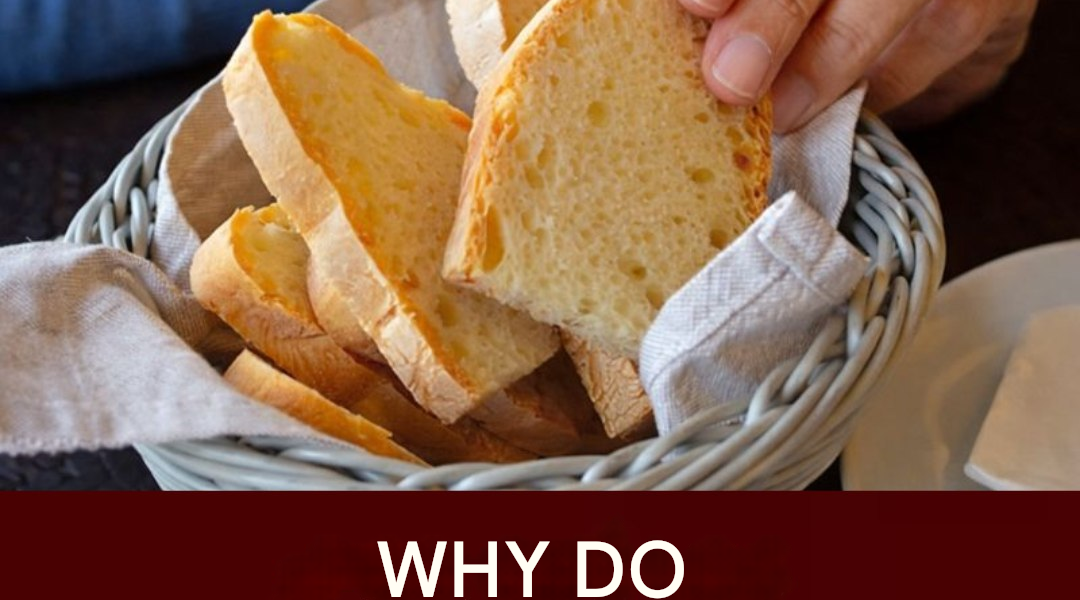
Why they bring you bread as soon as you sit down in a restaurant and the real reason behind that custom.

It’s not just politeness or a meaningless tradition. That bread arrives on the table as soon as you sit down responds to a strategy thought out in detail, backed by the science and neuroscience of consumption.
At first glance, the gesture seems like a sign of hospitality: they welcome you with something to snack on, make you feel comfortable and welcome you. If the bread is homemade, it even reinforces the idea of quality and care in the kitchen. But behind that everyday act there is a much clearer objective: to influence your consumption decisions.
The effect of bread on the brain
American neuroscientist Daniel Amen explained that eating bread while you’re still choosing what to order triggers a specific reaction in the brain. Bread, being rich in carbohydrates, quickly raises the blood sugar level, which stimulates the frontal lobe.
This area of the brain is related to key functions such as:
- Decision-making
- Self-control
- Judgment and planning
- Impulse regulation
When the frontal lobe receives this stimulus, a feeling of relaxation and well-being is generated that reduces the resistance to spend more. In other words: you feel more comfortable, less restrictive… and more willing to order entrees, additional dishes or desserts.
Bread, wine and larger orders
This effect does not occur only with bread. As Amen explains, alcohol—especially wine—acts in a similar way. That’s why, in many restaurants, in addition to bread, the waiter asks almost immediately if you want to drink something.
The combination of bread and alcohol generates an increase in serotonin, known as the “feel-good hormone”. The result is a more relaxed, happier customer… and with a greater tendency to order more food than I had planned.
An investment for the restaurant
From this point of view, bread is not a simple free detail, but a strategic investment. In fact, Amen himself argues that restaurants should not charge for bread, as their presence usually translates into a higher final bill.
Although in some places it is still included in the bill, business logic indicates that offering it at no cost generates higher total consumption and, therefore, higher profits.
Tips and recommendations for diners
- If you want to better control your spending, avoid eating bread before choosing the main course.
- Decide on your entire order before you start chopping.
- If you are watching your diet, remember that bread can increase appetite more than expected.
- Be aware that the first alcoholic drink can also influence your decisions.
Recommendations for restaurants
- Offering quality bread improves the perception of service and increases customer satisfaction.
- Not charging it may be more profitable in the long run.
- Presenting it as a gesture of welcome reinforces the gastronomic experience.
That basket of bread that arrives at the table is no coincidence. It’s a subtle, yet powerful tool that influences how you feel, how you decide, and how much you end up spending. The next time you see it, you will know that behind the gesture there is much more than simple hospitality.