How Shoe Pricing Is Formed: Margins, Marketing, and Footwear Industry Strategies
Paying $180 for a pair of sneakers has become commonplace. What many consumers don’t know is that the actual cost of making that same pair rarely exceeds $20. The difference is not an accounting error or a coincidence: it is the result of a carefully designed business model, where the physical product represents only a fraction of the value charged.
The True Cost of Making a Pair of Sneakers
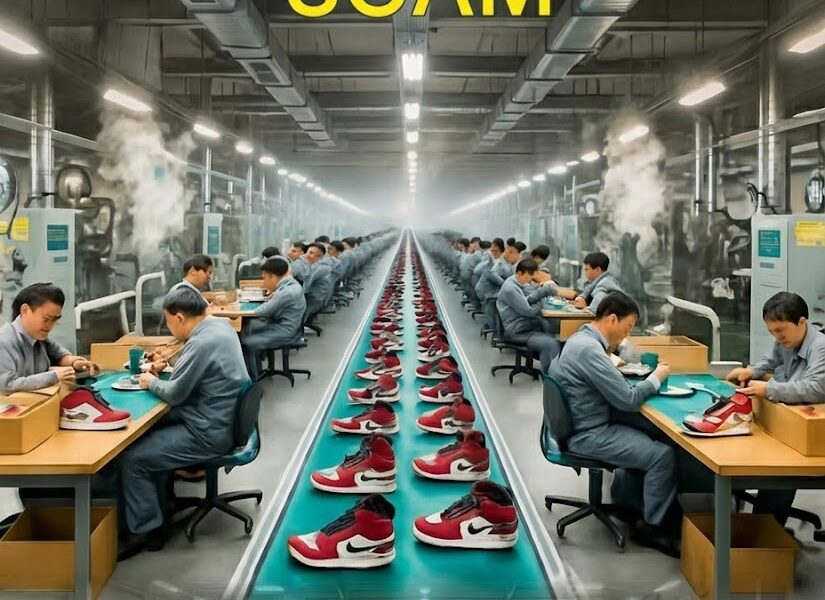
Most of the big brands produce their footwear in countries such as Vietnam, Indonesia, China or Bangladesh, where labor is significantly cheaper. According to various industry analyses, a pair of mid-range sneakers includes the following approximate costs:
- Materials: between $8 and $12 (synthetic leather, EVA foam, rubber soles, textiles).
- Labor: between $2 and $4 per pair.
- Logistics and tariffs: between 3 and 5 dollars.
- Packaging: less than $1.
With these figures, a sneaker that arrives at the counters with a price of 150 to 200 dollars leaves gross margins that far exceed 80%. The logical question is: where does the rest of the money paid by the consumer go?
Marketing as the main component of price
A significant part of the final price goes to advertising, sports sponsorships and image campaigns. Brands such as Nike, Adidas, Puma or New Balance invest billions of dollars a year in contracts with athletes, soccer players, professional teams and entertainment celebrities.
Nike alone, for example, has reported annual spending on marketing and endorsements in excess of $4 billion. That spend is passed on directly to the consumer: every pair sold helps fund the advertising contracts that maintain the desire for the brand.
Artificial scarcity and the culture of drops
Another central strategy in the urban footwear industry is the creation of artificial scarcity. Brands launch limited editions, exclusive collaborations and models in reduced quantities to generate a perception of exclusivity. This phenomenon, known as hype, fuels the resale market, where some models can fetch prices five or ten times higher than their launch value.
The scheme works because it turns an industrial product, manufactured in massive quantities, into a seemingly exclusive object. The scarcity does not respond to real production limitations, but to commercial decisions aimed at sustaining the symbolic value of the brand.
Technological innovation: reality or sales pitch?
The big brands justify part of their prices in supposed technological advances: special cushioning, reactive foams, smart fabrics or patented systems. While there is real investment in research and development, independent studies have shown that the functional difference between a high-end pair and a mid-range pair is usually smaller than the advertising suggests.
In comparative lab tests, budget models have offered similar levels of cushioning, durability, and performance as their premium counterparts. The difference, in many cases, is more in perception than in performance.
The role of the consumer in the system
The footwear industry would not be able to sustain these margins without a consumer willing to pay them. Several factors explain this disposition:
- Social status: certain brands and models function as symbols of belonging to specific cultural groups.
- Identity and self-expression: sneakers have become an extension of personality, especially in urban culture and streetwear.
- Constant advertising pressure: permanent exposure to campaigns reinforces the idea that certain products are aspirational.
- Secondary market: Resale platforms have transformed sneakers into speculative assets.
Alternatives for more informed consumption
Recognizing how the business works does not mean stopping buying branded shoes, but making more conscious decisions. Some useful recommendations are:
- Compare real technical specifications rather than advertising campaigns.
- Evaluate emerging or mid-range brands with good documented performance.
- Expect seasonal sales, where margins are reduced without affecting the quality of the product.
- Consider the actual durability of footwear and not just its aesthetic or resale value.
An industry built on perception
The footwear industry does not deceive the consumer in a legal sense: it delivers on its basic promises of quality and design. However, it operates on a model where the perceived value far exceeds the material value. Understanding these dynamics allows us to make more rational purchasing decisions and understand why an object manufactured for 20 dollars can be sold, without much resistance, for almost ten times that price.