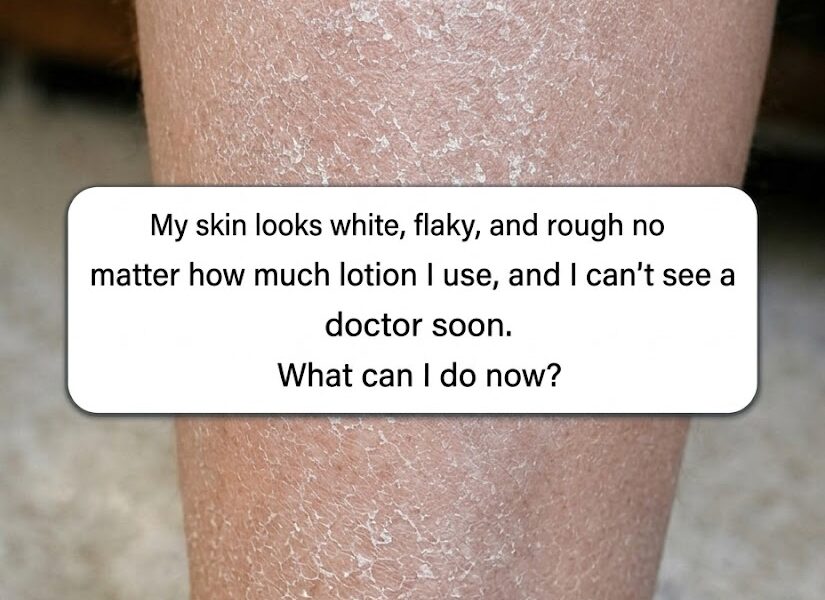
White, flaky and dry skin: what to do at home when cream is not enough
Having extremely dry, whitish and scaly skin can cause physical discomfort and affect self-esteem, especially when regular products fail to restore it. While you wait for a consultation with a specialist, there are concrete measures you can implement at home to relieve symptoms and protect the skin barrier. Here’s how to identify the problem, what to avoid, and what steps to take to restore your skin’s hydration.
First, rule out a medical emergency
Before starting any home routine, it’s important to make sure it’s not an emergency. If the dryness is accompanied by severe itching, pain, swelling, open wounds, or sores, it is advisable to seek medical attention immediately, as it could be an infection or a more serious condition. You should also go to the emergency room if skin changes come on suddenly along with fever, fatigue or other general symptoms, as they could indicate an allergic reaction or a systemic problem.
What is asteatotic eczema
A common cause of this type of extreme dryness is asteatotic eczema or xerotic eczema, which is characterized by very dry, cracked, and flaky skin. It usually appears in winter, when the humidity drops, and most often affects older adults or people with a history of eczema. The skin dries out when the epidermis loses water and the skin barrier is compromised, leaving it more vulnerable to external irritants.
Avoid hidden triggers
Some daily habits make dryness worse without you noticing:
- Hot and prolonged showers: remove the skin’s natural oils. Use warm water and limit showering to less than 10 minutes.
- Harsh soaps: replace them with gentle, fragrance-free, pH-balanced cleansers.
- Excessive washing: bathing too many times a day dehydrates the skin. Once a day is usually enough.
Choose a more effective moisturizer
If your regular lotion no longer works, it’s a good idea to switch to a more potent formula. Look for products that contain ceramides, hyaluronic acid, glycerin, urea, or lactic acid. Thick ointments and creams are more occlusive than liquid lotions and form a better barrier against moisture loss. Apply them immediately after bathing to seal in moisture.
The “soak and seal” method
This dermatologist-recommended technique provides quick relief:
- Soak in warm water for 10 to 15 minutes, without using soap.
- When you leave, gently dry the skin with a towel, leaving it slightly damp.
- Apply a generous layer of heavy cream or ointment immediately.
Repeat at least once a day, preferably before bedtime, to maximize skin barrier recovery.
Correct way to apply hydration
After bathing, pat your skin dry without rubbing. Apply the cream in upward circular motions to stimulate absorption and circulation. In particularly dry areas, you can place an additional layer of an oil-based product on top of the cream to reinforce the moisture seal.
Soft products: read labels well
Avoid formulas with alcohol, fragrances, dyes, sodium lauryl sulfate, and parabens, as they irritate sensitive skin. Look for labels that say “hypoallergenic” and “fragrance-free.” Soothing ingredients such as aloe vera, chamomile and colloidal oatmeal are ideal for relieving irritation and redness.
Clothing, Laundry & Home Environment
Clothing also plays a role. Choose soft, breathable fabrics like cotton, and avoid wool or synthetic fibers that rub against the skin. Wash clothes with hypoallergenic and unscented detergents. At home, using a humidifier, especially in the bedroom at night, helps maintain humidity in the room and prevents dry air from pulling water from your skin.
Safe over-the-counter treatments
While you wait for the doctor’s consultation, you can turn to pharmacy products. Hydrocortisone cream reduces inflammation and itching, but should be used sparingly and according to the directions on the package. Creams with urea or lactic acid gently exfoliate and provide deep hydration. Remember that these options relieve symptoms, but they do not replace professional diagnosis.
Keep track of your skin
Documenting the evolution is very useful for your next consultation. He notes:
- Changes in color, texture, redness, or swelling.
- Products you tried and how your skin reacted.
- Factors that seem to worsen or improve symptoms.
If the condition worsens or does not improve despite your care, do not delay medical care.
Conclusion
White, flaky, and dry skin is often the result of a skin barrier weakened by environmental factors, hygiene habits, or conditions such as asteatotic eczema. Even if you can’t see a dermatologist right away, you can greatly improve your skin by adjusting the water temperature, using gentle products, applying occlusive moisturizers using the “soak and seal” method, and protecting your environment with humidifiers and appropriate clothing. Keeping a detailed record will allow you to arrive at the consultation with valuable information that will help the professional provide you with a more precise and effective treatment.