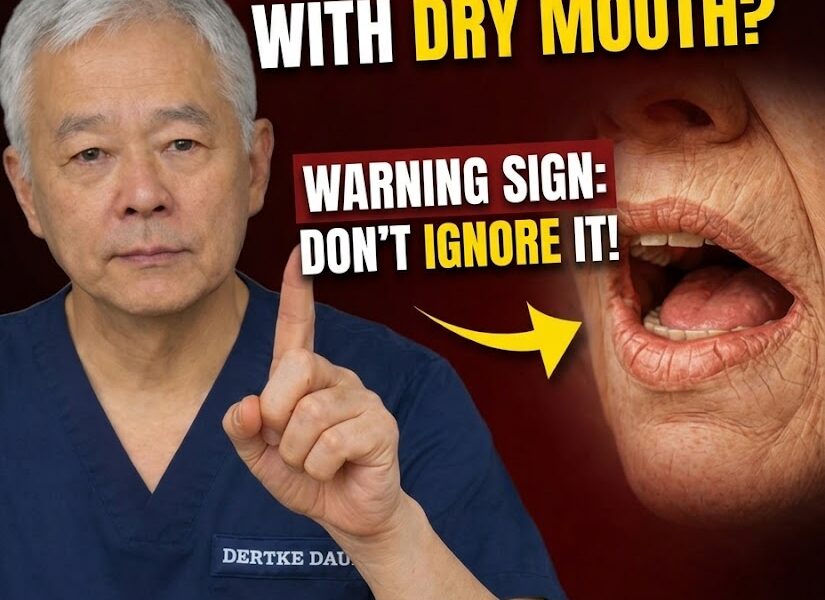
If you wake up with dry mouth or lips, your body could be sending a signal that should be checked.
Imagine a quiet morning. The house is still quiet and the light of dawn is just beginning to enter through the window. You wake up slowly, turn in bed, and suddenly notice something strange.
Your mouth is very dry. The lips seem to be pressed together. The tongue feels heavy and rough. You try to swallow saliva, but there is almost none.
Many people at that time think the same thing: “I must have drunk little water yesterday” or “Maybe I slept with my mouth open.”
Then they just get up, have a glass of water and go about their day without giving it a big deal.
But doctors who have worked with older patients for decades are warning of one important thing: Dry mouth upon waking can sometimes be an early sign that something isn’t working well in the body.
Why saliva is so important
Saliva is not just a liquid that moistens the mouth. In fact, it fulfills essential functions for health:
- Protects teeth against bacteria
- Keeps gums and oral mucosa healthy
- Aids in the digestion process
- Reduces the growth of harmful microorganisms
When the body produces less saliva than normal, the natural balance of the mouth is disturbed and different problems begin to appear.
That’s why waking up with a completely dry mouth shouldn’t become commonplace.
1. Medications that reduce saliva production
One of the most common causes, especially in people over 60, is medications.
Many everyday drugs can decrease saliva production, including:
- Blood pressure medications
- Anti-allergic
- Antidepressants
- Some pain relievers
- Medicines for heart problems
Many people take these medications for years without imagining that one of their side effects may be dry mouth upon waking.
2. Breathing through the mouth during sleep
Another common cause is breathing through the mouth while we sleep.
When the air passes through the mouth all night, the mucous membrane dries out and in the morning the sensation of “having sand in the mouth” appears.
This may be related to:
- nasal congestion
- Allergies
- deviated septum
- intense snoring
In some cases it can also be associated with sleep apnea, a disorder in which breathing stops for a few seconds several times a night.
This causes less oxygenation, greater effort of the heart and a waking up with tiredness and dry mouth.
3. Diabetes or high blood sugar levels
Dry mouth can also be one of the first symptoms of diabetes.
When your blood sugar level rises, your body tries to get rid of excess glucose through your urine. This process causes increased fluid loss.
As a result, the following appear:
- Be Constant Thirst
- Need to drink water at night
- dry mouth upon waking
For this reason, many doctors pay special attention to this symptom.
4. Dehydration
Over the years, the body loses some of the natural sensation of thirst.
Many people simply don’t drink enough water during the day.
During the night the body continues to use fluids for its normal functions, and if the reserves are low, in the morning symptoms such as:
- dry mouth
- dry lips
- feeling intensely thirsty
5. Stress and emotional tension
The nervous system can also influence saliva production.
When a person lives under prolonged stress, the body releases tension hormones that can affect the functioning of the salivary glands.
This means that less saliva is produced during the night and when you wake up that uncomfortable dryness appears.
6. Nasal breathing problems
If air cannot enter properly through the nose, the body compensates by breathing through the mouth during sleep.
This can happen by:
- chronic rhinitis
- Allergies
- sinusitis
- deviation of the nasal septum
The result is the same: the mouth remains open for hours and the mucosa dries out completely.
7. Dental problems and bacteria
When saliva production decreases, bacteria in the mouth can multiply faster.
This increases the risk of:
- Cavities
- Gum inflammation
- bad breath
- Oral infections
That’s why many dentists consider persistent dry mouth a symptom that deserves attention.
Tips and recommendations to reduce dry mouth
A few simple actions can help to improve this problem a lot.
1. Drink enough water throughout the dayConstant hydration is essential for the body to produce saliva properly.
2. Drink a glass of water about an hour before bedtimeThis helps the body maintain fluid balance during the night.
3. Avoid very salty foods before bedtimeSalt increases the feeling of thirst and can worsen dryness.
4. Ventilate the room well before going to sleepAn environment that is too dry can intensify this problem.
5. Watch how you breathe while yousleep If you often wake up with a sore throat or dry lips, it could be a sign of mouth breathing.
6. Review your medications with a healthcare professional If the dryness started after starting treatment, it could be a side effect.
7. Maintain good oralhygiene Brushing properly and visiting the dentist helps prevent problems derived from lack of saliva.
The body rarely sends signals for no reason. Even something seemingly small, like waking up with a dry mouth, can be a clue that something needs attention.
In many cases the cause is simple and can be corrected with small lifestyle changes. But if the symptom appears frequently or becomes more intense, it is best to consult a health professional.