20.10.2025
Stop frying eggs. Learn how to make perfect poached eggs, easy for beginners
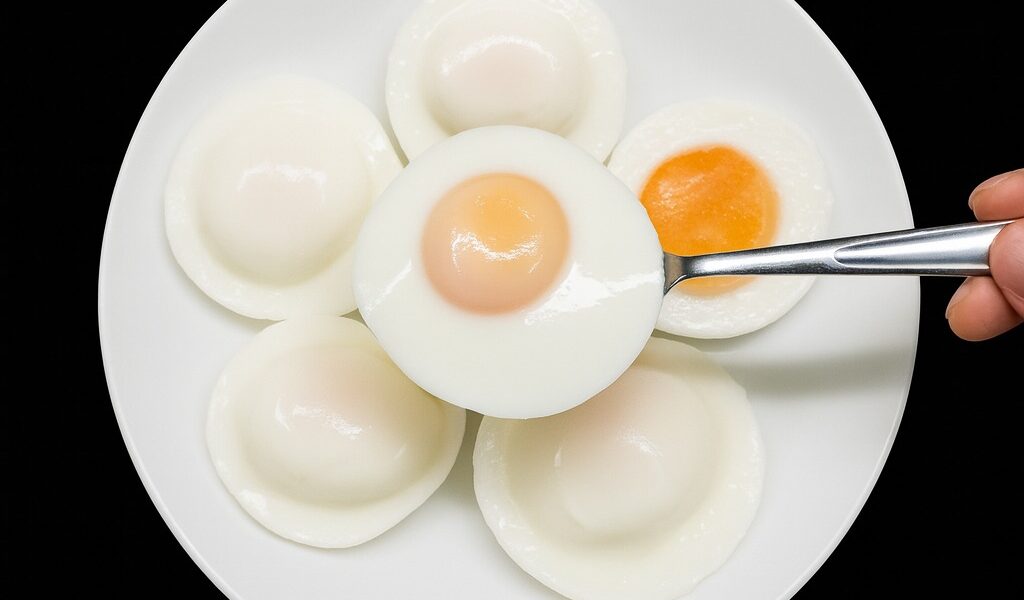
Fried eggs are delicious… but poached eggs have something special: the soft yolk, the egg white cooked just right, and that delicate texture you can’t find in any other style.
In this guide, you’ll learn how to achieve creamy poached eggs without special tools, complicated tricks, swirls, or breaking the yolk—just a reliable method that works.
You can also follow each step of the process in the following video from the Click DIY channel:
Ingredients
- Fresh eggs (the fresher the better — they help the egg whites stick more tightly)
- Water
- White vinegar or mild vinegar (optional, but helps coagulate the egg white)
- Salt (optional)
Easy step by step
- Prepare the water.
In a medium saucepan, place enough water so that the egg can float freely (about 5-7 cm deep). Bring to a gentle boil. - Reduce the heat
. When the water is at a rolling boil (small bubbles, not a full boil), reduce the heat to a simmer. You want it to be very close to boiling, but not boiling. - Add vinegar (optional but helpful)
Add one tablespoon of vinegar per liter of water. This helps the egg white coagulate better around the yolk, preventing it from spreading too thin. - Cracking the Egg
Carefully crack the egg into a separate small bowl or cup. This allows you to see if the yolk is intact and also makes it easier to place it cleanly into the water. - Add the egg to the water.
Using a spoon or spatula, bring the bowl right up to the water and gently slide the egg in. Don’t stir or swirl it around. - Cook:
Let it cook for about 3-4 minutes for a creamy yolk (you can adjust depending on how firm you want the egg white). If you prefer a firmer yolk, let it cook for 5 minutes. - Remove the egg.
Use a slotted spoon to carefully remove it. Drain it on absorbent paper to remove excess water. - Serve.
Season to taste with a little salt, pepper, perhaps fresh herbs (parsley, chives), or other spices if you like. Serve immediately, as cooling the yolk can accelerate the cooking process.
Additional tips to make them even better
- Use super fresh eggs : The fresher an egg is, the firmer the white will be when cooked, resulting in cleaner edges.
- Vinegar matters : Use white or light wine vinegar (avoid highly aromatic vinegars, which can leave a taste). If you don’t have vinegar, the poached egg can still turn out well; it might just make the egg white a little more “fuzzy.”
- Stable water temperature : Keeping the water barely bubbling is key. If it boils too hard, the movement in the water can break the egg’s shape.
- Pot size : A wide-bottomed pot or casserole dish allows room for the egg to cook without touching the sides, which helps it maintain its shape.
- Multiple eggs : If you’re poaching more than one egg at a time, it’s best to do it in batches (one or two at a time) to better control the temperature and shape. Also, make sure the eggs you put in the water are very close in temperature to each other.
With barely bubbling water, fresh eggs, patience, and a few simple tricks, you’ll achieve perfectly poached eggs: creamy inside, with firm whites, no broken yolks, no swirls, and no stress!