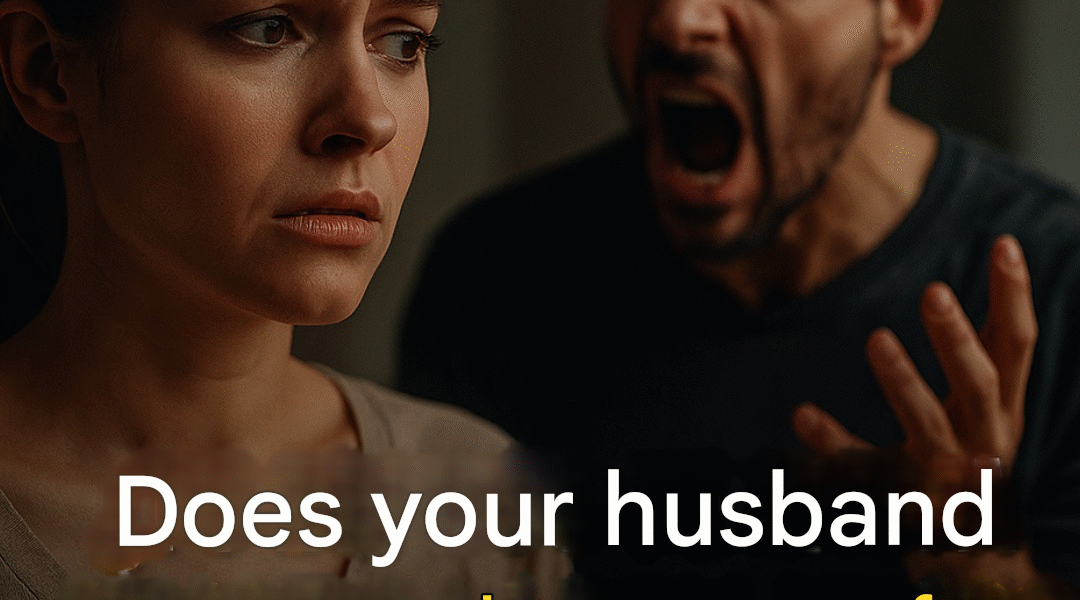
If your husband gets angry when you complain, pay attention to these hidden signs
Have you ever noticed that every time you express a complaint or point out something that bothers you, your husband reacts angrily? This situation, more common than it seems, can strain the relationship and create a tense atmosphere at home.
However, behind these reactions lie hidden signals that should be identified to better understand what is happening. Recognizing them is the first step to avoiding unnecessary conflicts and strengthening communication.
Anger in response to complaints doesn’t always mean a lack of love or interest; often it reflects emotional deficiencies, communication problems, or even unresolved wounds. Pay attention to these signs:
1. Lack of communication skills
Some men don’t know how to express their emotions without resorting to anger. Anger can be their way of avoiding a conversation they don’t know how to handle.
2. Feeling of attack
If your husband interprets every complaint as a criticism of his personal worth, he will tend to become defensive. This can be a sign of insecurity or low self-esteem.
3. Accumulated stress
Work, financial, or family stress can make any comment the final straw. In these situations, the anger isn’t directed solely at you, but at the emotional burden you’re carrying.
4. Learned pattern
Some men grew up in environments where anger was the primary way to resolve conflicts. This learned behavior can be repeated in adulthood without them being aware of it.
5. Desire to avoid conflict
Paradoxically, anger can be an unconscious strategy for quickly ending a conversation. Shouting, arguing, or getting upset is, for some, a way to avoid delving into uncomfortable topics.
How to differentiate anger from emotional violence
Not all anger is violence, but it is crucial to learn to differentiate between them.
- Momentary anger is usually related to an impulsive reaction. It can be annoying and create tension, but it is not intended to cause deliberate harm.
- Emotional violence , on the other hand, involves a repeated pattern of humiliation, yelling, insults, hurtful sarcasm, or contemptuous attitudes. The goal, whether conscious or not, is to devalue the other person and establish control in the relationship.
Identifying this difference is vital: while fleeting anger can be addressed with communication and patience, emotional abuse requires setting clear boundaries and, in many cases, professional support. Recognizing it early protects not only the relationship but also the self-esteem and emotional well-being of the person experiencing it.
The role of empathy in relationships
Empathy is one of the most powerful tools for defusing conflict. It consists of putting yourself in the other person’s shoes and understanding what lies behind their reaction.
- A husband who gets angry easily may be expressing fear of failure , accumulated tiredness , or feelings of inadequacy .
- When a woman responds with understanding instead of judgment, she lowers the intensity of the conflict and opens up space for dialogue.
This doesn’t mean justifying all anger, but rather understanding the underlying reasons to address it more effectively. Empathy also allows couples to transform the “accuser vs. accused” dynamic into a collaborative search for solutions. Ultimately, couples who practice empathy build stronger, more resilient, and more respectful relationships.
Tips for handling the situation
- Choose the right time : avoid complaining when he is stressed or tired.
- Use positive language : instead of “you never help me”, try “it would do me good if you helped me with this”.
- Stay calm : don’t respond to anger with more anger, as that only increases the conflict.
- Validate their emotions : acknowledge what they feel, even if you don’t agree. This reduces tension.
- Seek joint solutions : transform the complaint into a space to solve together what is not working.
- Consider outside help : if arguments are very frequent, couples therapy can be a valuable tool.