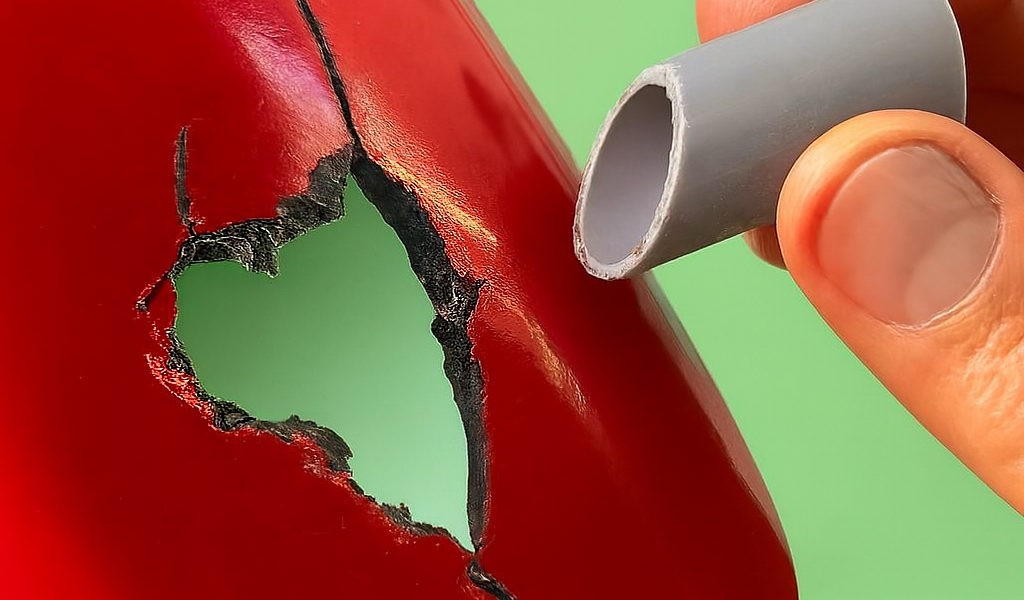
Even American mechanics are not aware of this amazing plastic repair technique.
When a motorcycle’s plastic breaks down — whether it’s a fender, a side cap, or a fairing part — most people think it’s just a replacement part. However, there is a little-known, incredibly resistant and economical method that allows damaged parts to be recovered as if they were new. This technique combines plastic welding, metal reinforcement and a professional finish that restores solidity and aesthetics to any broken part.
The procedure is explained below step by step, based on a real example of a fender repair.
1. Preparation and initial reinforcement
Identifying the damage
The first thing is to evaluate the breakage. In the original video, the process begins by showing a split fender, with separate sections that require alignment and support before welding.
Cutting the filler material
PVC pipes are used and cut into small strips. These parts function as “filler plastic” during welding, providing new material that fuses with the original.
Stabilization with aluminum tape
To hold the parts together and prevent the piece from warping, aluminum tape is applied to the back. This tape is heat resistant and keeps the part stable while welding is being done.
2. Plastic welding and structural reinforcement
Initial Merge
Using a heat tool—such as a plastic soldering iron—you begin to fuse the edges of the break, joining the part from the surface.
Metal reinforcement
To increase the strength of the repair, a stainless steel mesh is embedded over the affected area. The heat allows the mesh to be integrated into the plastic, preventing the crack from reopening.
Weld End Layer
Once the mesh is fixed, a new layer of molten PVC is applied. This seals the repair, fills gaps and ensures an extremely firm bond.
Adhesive Application
To remove micro-cracks or surface imperfections, a high-strength glue is used. This prepares the part for the sanding process and improves the final appearance.
3. Professional finishing and painting
Coarse sanding (80 grit)
Excess material is removed and the surface is evened out.
Intermediate sanding (320 grit)
This step smooths out the deep marks from the previous sanding and prepares the base for a fine finish.
Final sanding (600 grit)
The piece is completely smooth and ready to paint.
Primer application
A layer of white primer is applied that evens out the surface and improves the adhesion of the paint.
Final painting
With spray paint of the original color (in the example, red), the part is returned to its new appearance. The result: a fully restored mudguard that is solid, resistant and visually flawless.
Tips and recommendations
- Always wear protection: gloves, mask and safety glasses.
- Be sure to work in a ventilated space when using soldering irons or spray paint.
- Don’t apply too much heat; Plastic can warp if it gets hotter than necessary.
- Stainless steel mesh is key to a long-lasting repair; Avoid common meshes that can rust.
- If you’re going to paint, respect the drying times between coats for a professional finish.
For a better understanding of this content, we invite you to watch the video of the Gaus DIY channel:
With this advanced – but simple – technique you can repair broken plastic parts and leave them as good as new, saving money and achieving a strength that even exceeds that of the original material. An effective solution that very few know about.
👉 Follow our page, like 👍, and share this post. Every click can make a difference—perhaps saving your own life or that of a loved one.