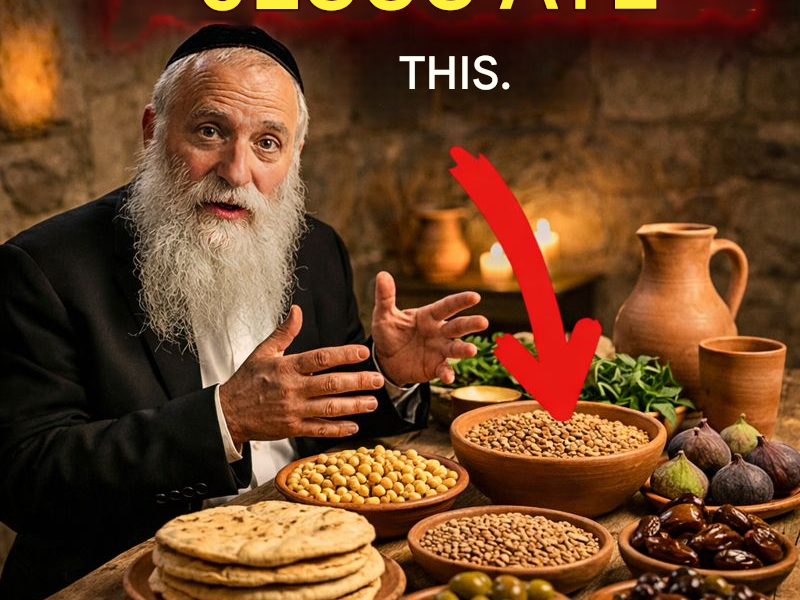
What Jesus ate according to the biblical accounts and the context of his time.
When we think of Jesus, we often imagine him preaching, healing the sick, or speaking in parables. However, we rarely stop to think about something profoundly human: what he ate, how he ate and what that meant within his life and his message. Far from being a minor detail, his daily table reveals much about who he was and how he understood the Kingdom of God.
Jesus was not an ethereal being disconnected from reality. He lived like any Jew in Galilee in the first century: he worked, walked long distances, felt hungry, thirsty and tired, and sat at the table with people of all kinds. In a culture where eating together was a spiritual, social, and religious act, food became as powerful a language as their words.
The context in which Jesus ate
Jesus was born and lived in a society marked by poverty, Roman taxes, and severe social inequality. The majority of the population – peasants, fishermen and artisans – lived on the bare minimum. Added to this was the obligation to pay tribute to both Rome and the Temple, which left many families with very little to eat.
Galilee, the region where Jesus spent much of his life, was fertile and surrounded by the Lake of Galilee, an important source of fishing. However, the diet did not depend on luxury, but on what the land and lake offered in each season.
In addition, every observant Jew had to follow kosher laws, which regulated what foods could be eaten and how they were to be prepared. These rules not only had a religious purpose, but also helped to preserve the identity of the people in the midst of foreign domination.
How an ordinary Jew ate in Jesus’ day
Life was not organized in breakfast, lunch and dinner as it is today. The usual thing was two meals a day:
- A small mid-morning intake, quick and simple, designed only to support the body during work.
- A more complete meal at sunset, already at home, shared with family or guests.
On feast days, such as Easter, a third meal could be added on a ceremonial basis.
Jesus, as a craftsman and then as an itinerant master, followed this same rhythm. Many times he depended on the hospitality of others to share the nightly meal.
The Staple Foods on Jesus’ Table
Bread: the center of everything
The main food was bread, especially barley bread, which was cheaper and stronger than wheat bread. It was the bread of the poor. It was baked at home, broken with the hands and used to take stews or dip in oil.
When the Gospels speak of the multiplication of the loaves, they are not referring to large loaves, but to these small barley loaves, the daily sustenance of the people.
Olive oil
Olive oil was indispensable. It was used for eating, cooking, preserving food, lighting lamps and even for medicinal purposes. A typical breakfast might simply be bread dipped in oil with a little salt or herbs.
Legumes and herbs
Lentils, chickpeas, broad beans and peas were the main source of vegetable protein. They were prepared in thick stews with garlic, onions, wild herbs and spices such as cumin or coriander.
These stews could stay warm for hours, especially on the Sabbath, the Sabbath.
Fruits and fruits
Figs, dates, grapes, pomegranates, and raisins were an essential part of the diet. They were eaten fresh or dried, and were an important source of energy and nutrients.
Fish
In Galilee, fish was the most accessible animal protein. Tilapia, sardines and carp were roasted or preserved in salt. Jesus, surrounded by fishermen like Peter and Andrew, would have eaten it frequently.
The meat
Meat was a luxury. It was only eaten on large religious festivals such as Easter or on special celebrations. For most, they could go months without trying it.
Beverages and sweeteners
They drank water, goat’s milk and wine diluted with water. Pure wine was reserved for celebrations.
The only known sweetener was wild honey, used sparingly.
Food as part of Jesus’ message
Jesus didn’t just eat; He taught through food. Bread, fish, and wine became symbols of God’s Kingdom because they were the real foods of the people.
When he multiplied the loaves and fishes, he did not use palace delicacies, but what any poor Galilean had: barley bread and salted fish. That was a powerful proclamation: the Kingdom begins at the table of those who have little.
After the resurrection, the disciples recognized him not by a theological explanation, but when he broke bread. The revelation happened at the table.
And at the Last Supper, that same bread and that same humble wine became the center of a new covenant.
Tips and recommendations
- Remembering how Jesus ate invites us to value the simple and not despise the everyday.
- A simple, natural and shared diet can be a form of spirituality.
- Sharing the table with others, especially those who need it most, remains a profound way to live out Jesus’ message.
- Avoiding excess and waste is also a way to honor food as gifts.
Jesus ate as the people ate: plain bread, fish from the lake, fruits of the earth, and shared wine. From that humble table he announced a Kingdom that is not born in the abundance of the powerful, but in the need of those who hope. In the simplest thing, Jesus revealed the deepest.
👉 Follow our page, like 👍, and share this post. Every click can make a difference—perhaps saving your own life or that of a loved one.