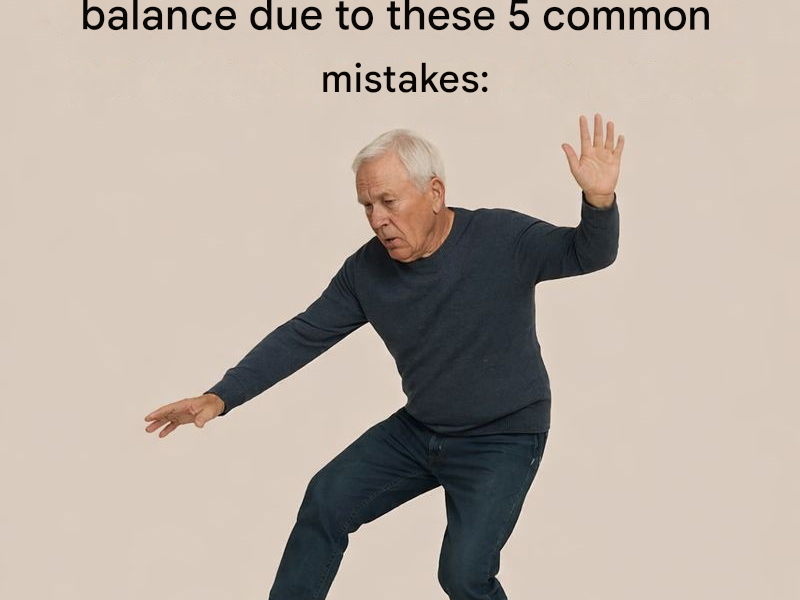
Seniors Are Losing Their Balance Over These 5 Common Mistakes: How to Avoid Them Early

Losing your balance isn’t always an inevitable symptom of aging. Although many older people experience insecurity when walking or occasional dizziness, in many cases these problems arise from everyday habits or factors that can be corrected.
Understanding which mistakes are the most common and how to avoid them can make a big difference in maintaining independence and reducing the risk of falls.
1. Lifestyle with very little physical activity
Sitting a lot or avoiding physical activity may seem comfortable, but as we age, the muscles that support balance — especially those in our legs, trunk, and back — need regular exercise to stay strong. A sedentary lifestyle contributes to muscle weakness, which is directly linked to an increased risk of trips and falls.
How to avoid it:
- Walk between 20 and 30 minutes a day.
- Include gentle stretching and low-impact activities such as yoga or tai chi.
- Gradually increase activity to avoid fatigue.
2. Improper footwear that hinders stability
Shoes that don’t fit well, have smooth soles, or lack good support can transform even familiar surfaces into potential hazards. Proper footwear helps to better distribute the weight of the body and maintain a stable posture.
How to avoid it:
- Choose closed shoes with good support and non-slip soles.
- Avoid high heels or excessively worn footwear.
3. Poor nutrition and hydration
Lack of a balanced diet or adequate hydration can lead to general weakness, dizziness, and fatigue, affecting coordination and stability.
How to avoid it:
- Drink water regularly throughout the day.
- Maintain a diet rich in fruits, vegetables, protein, and whole grains.
- Consult your health care provider to adjust your diet according to individual needs.
4. Hidden risks in the domestic environment
The home, which should be a safe place, can hide dangers that increase the risk of inadvertently losing your balance. Loose carpeting, cluttered hallways, or insufficient lighting can contribute to trips and falls.
How to avoid it:
- Securing carpets and rugs with adhesives or removing them.
- Keep paths clear of objects.
- Improve lighting, especially in high-traffic areas such as the bathroom or hallways.
5. Lack of attention to vision and hearing
Sight and hearing are fundamental allies to maintain balance. When these senses are impaired and left untreated, our ability to perceive the environment and respond to changes in terrain is reduced, increasing walking insecurity.
How to avoid it:
- Schedule regular eye and hearing exams.
- Wear appropriate glasses or hearing aids when necessary.
Maintaining a good balance not only involves correcting visible risks, but also adopting healthy habits that strengthen the body and improve the perception of the environment. With small but consistent day-to-day changes, many seniors are able to move with more safety and confidence.
👉 Follow our page, like 👍, and share this post. Every click can make a difference—perhaps saving your own life or that of a loved one.